South Korea denies preparing Hormuz strait deployment amid US pressure
South Korea's presidential office has pushed back on media reports that it is readying a military deployment to the strait of Hormuz, saying nothing has been decided even as a review continues amid US pressure.
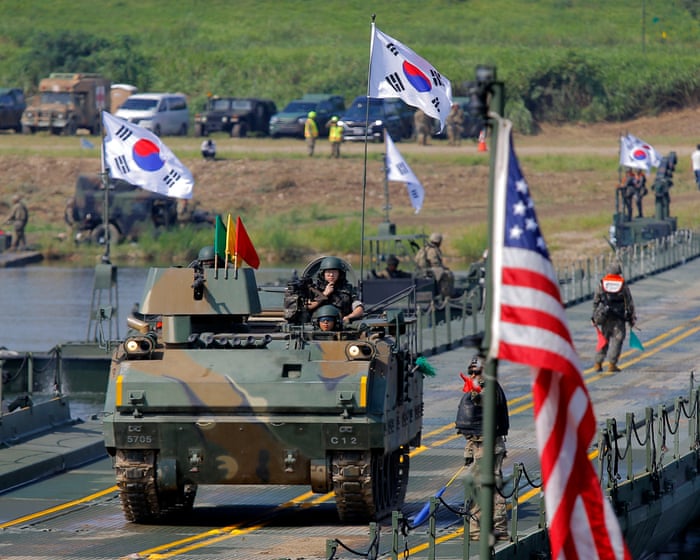
Several South Korean media outlets reported on Thursday and Friday that the government was preparing to send military assets to the strait of Hormuz and intended to seek parliamentary approval for the move. The reports, citing unnamed government and military sources, said the exact scale and timing had not yet been agreed.
The office of President Lee Jae Myung disputed the reports, calling them "different from the facts" and stating that "nothing related to the matter has been decided," while acknowledging that a review was continuing. An official said the government was discussing with the international community practical ways to help restore free navigation through the strait and support peace and stability in the Middle East.
Assets under consideration
Among the assets reportedly under review is a P-8 Poseidon maritime patrol aircraft, which would mark South Korea's first overseas deployment of such an aircraft, along with a naval logistics support ship. Broadcaster SBS additionally reported that an explosive ordnance disposal team from the navy's underwater demolition unit was part of the proposed package.
Any new deployment would in principle require review by the national security council, a cabinet resolution, and approval from the national assembly. South Korea depends heavily on the strait, importing more than 90% of its primary energy and roughly 70% of its crude oil through the waterway.
In 2020, the government of then-president Moon Jae-in expanded the mandate of an existing anti-piracy unit off Somalia to cover the strait of Hormuz without seeking new parliamentary approval. In March, Defence Minister Ahn Gyu-back told parliament that a new deployment would differ enough from that unit's mandate to require the assembly's consent.
Strains with Washington
The reports come as tensions grow between Seoul and Washington. Trump has repeatedly complained publicly that South Korea declined his request for help over Iran, and later ordered the Ulchi Freedom Shield joint military exercises shortened by six days. The alliance has also been strained by delays in implementing a $350bn investment package, reports of restricted US intelligence sharing, and a dispute over a data breach at e-commerce company Coupang. Separately, Seoul has expressed interest in joining any renewed US-North Korea diplomacy.