James Webb Telescope: Scorching Planet TOI-561 b May Have Kept Its Atmosphere
James Webb Space Telescope observations suggest that the rocky planet TOI-561 b, about 280 light-years away, may have an atmosphere with reflective clouds, even though it was expected to have lost it billions of years ago. The results were published in The Astronomical Journal.
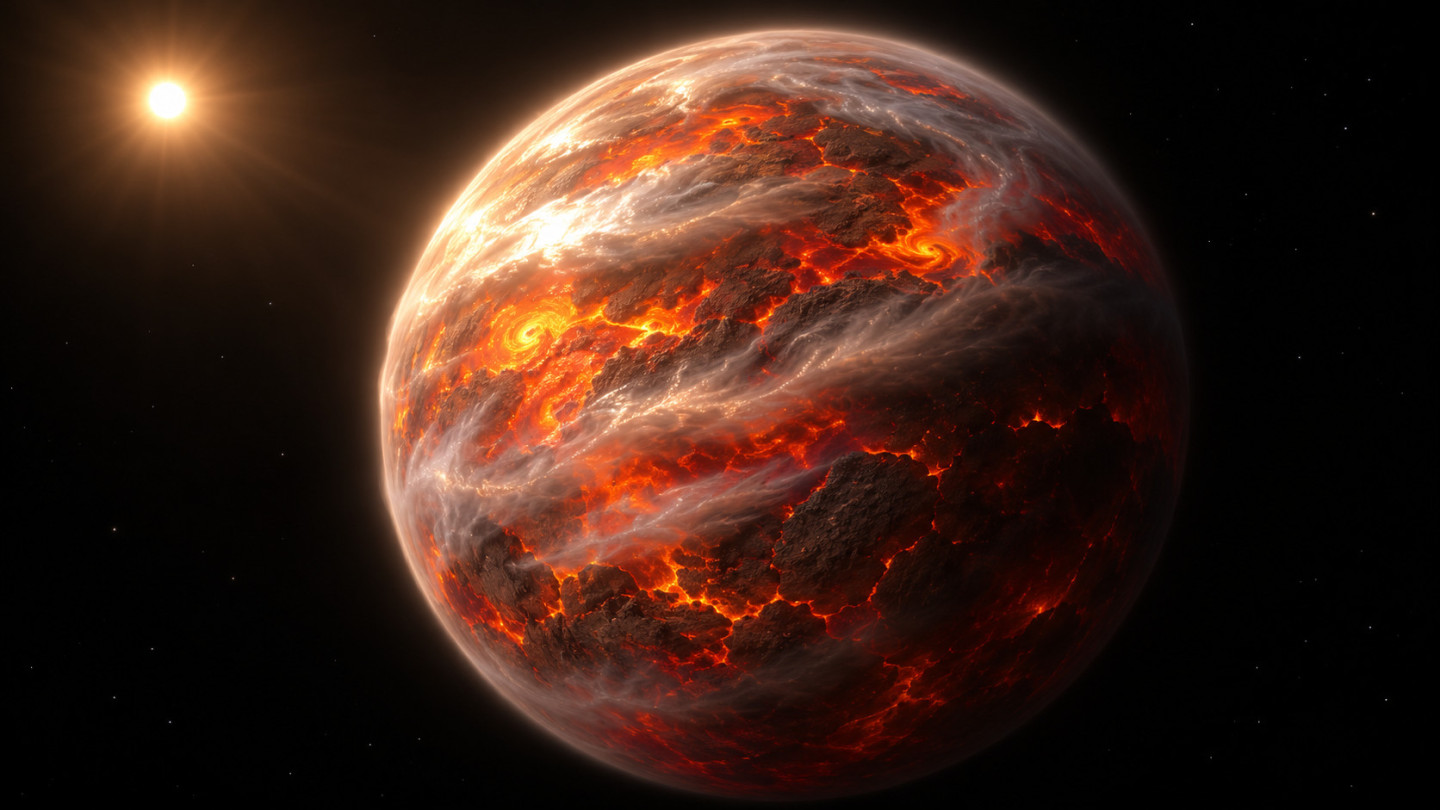
Observations by the James Webb Space Telescope, a NASA space observatory, suggest that the planet TOI-561 b, which is covered by an ocean of molten rock and lies about 280 light-years from Earth, may have retained a substantial atmosphere. This surprises astronomers, because earlier predictions held that a planet so close to its star would have lost its atmosphere billions of years ago. The findings were published in the scientific journal The Astronomical Journal, according to the University of Birmingham.
Observations
An international team of researchers observed the planet for 37 hours, covering almost four of its orbits around the star. Scientists were struck by the unexpectedly cool dayside of the planet. A bare, dark rocky surface so close to a star should be hotter, yet the observations show that the planet reflects about three quarters of the starlight it receives.
Possible explanations
This effect may be caused by silicate clouds acting as a kind of sunshade. Climate models allow that the clouds could contain silicon dioxide and magnesium silicate. However, the composition of the clouds and the correctness of this explanation still have to be confirmed.
Researchers also suggest that the atmosphere is continuously replenished by gases released from the planet's molten interior. This would help explain how it manages to survive under intense radiation. It is not yet known which gases dominate.
Further Webb observations will help test the atmosphere's composition and the explanations for its unusual survival.