Jay Clayton sworn in as US director of national intelligence
Jay Clayton has been sworn in as the ninth director of national intelligence, succeeding Tulsi Gabbard. His confirmation was overshadowed by his refusal to explicitly acknowledge that Donald Trump lost the 2020 presidential election.
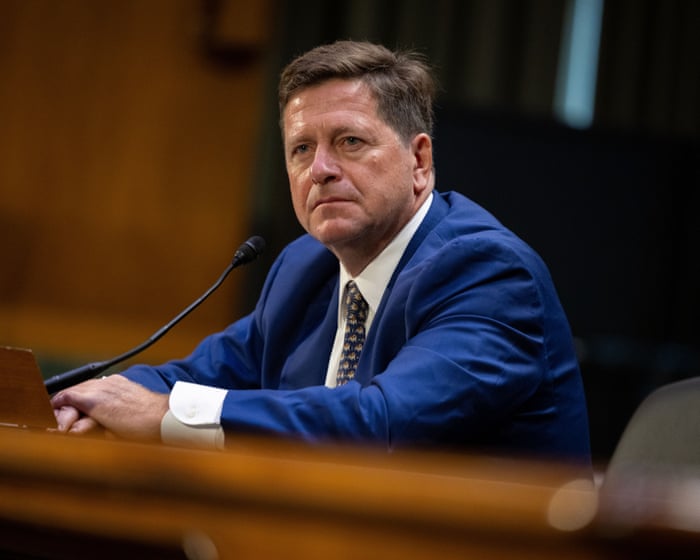
Jay Clayton was sworn in on Tuesday as the top US intelligence official. Treasury Secretary Scott Bessent administered the oath in the Oval Office, with President Donald Trump watching and applauding. Clayton becomes the ninth director of national intelligence, replacing Tulsi Gabbard, who stepped down in June. He will oversee 18 US intelligence agencies.
The appointment follows a turbulent two-month period in which the intelligence community was temporarily led by Bill Pulte, a housing regulator installed by Trump as acting director after Gabbard's departure. Pulte's lack of national security experience unsettled some Republicans, but during his brief tenure he became involved in the administration's increasingly prominent effort to raise concerns about the integrity of US elections.
Shortly before Clayton's confirmation, Pulte released intelligence community documents from 2020 describing China's capacity to interfere in US politics and vulnerabilities in the election system. The material had been largely known before, but its release came as Trump has made "election security" a central political issue ahead of November's midterm elections. Trump continues to promote false claims that the 2020 election, which he lost to Joe Biden, was stolen. During Pulte's tenure, he also released classified material that he said supported his arguments.
Clayton's own confirmation was overshadowed by the same issue. Democrats condemned his refusal to state that Biden had won the election, while Republicans ultimately confirmed him along party lines. The controversy has raised questions about how the intelligence community will operate under a president who has repeatedly accused federal agencies of being "weaponised" against him.
In his first statement as director, Clayton sought to address those concerns, promising to protect the intelligence community from political interference. He said the safety and security of the American people would be their guiding priority, and that they would work to ensure the public had complete confidence in the intelligence community through proper oversight, transparency and accountability. He added that the vital work of the intelligence community should never be weaponised for political motives.
Clayton brings substantial experience in law enforcement and government to the job. As US attorney in Manhattan, he oversaw prosecutions involving terrorism, international drug trafficking and organised crime. Before that, he chaired the Securities and Exchange Commission from 2017 to 2020, during which the administration says he oversaw more than 2,300 enforcement actions resulting in more than $10bn in penalties and disgorgement. He has also held senior positions in business and law, including at Apollo Global Management and Sullivan & Cromwell, and has taught at the University of Pennsylvania and Wharton.
Republican senators have pointed to that record as evidence that Clayton is qualified to lead the intelligence community. Senate Majority Leader John Thune called him a "proven leader" whose record inspired confidence. Senator Tom Cotton, chair of the Senate intelligence committee, said Clayton had deep experience in national security threats. Senator Katie Britt of Alabama also congratulated him on X on Tuesday.
Clayton now inherits an intelligence community that has already endured a succession of upheavals under Trump. Gabbard's tenure was marked by clashes with congressional Democrats, who accused her of advancing the president's political agenda and promoting debunked election claims. Pulte's temporary appointment then raised fresh concerns about the politicisation of the intelligence agencies.
Clayton said his aim was to create an intelligence organisation that was "streamlined, agile, team-oriented and mission-focused". He added that he looked forward to ensuring the men and women of the intelligence community have the resources they need to carry out their critical mission.
With just over three months left before midterm elections that will decide which party controls Congress, Trump has escalated efforts to make "election security" a central issue, despite established findings that voter fraud is rare.


