Eesti Raudtee: Closing Estonia's Road Border With Russia Unlikely to Boost Rail Freight
Estonian state-owned railway company Eesti Raudtee believes that closing road border crossings with Russia is unlikely to increase rail freight. It cites the geopolitical situation and capacity limits of Russian railway infrastructure.
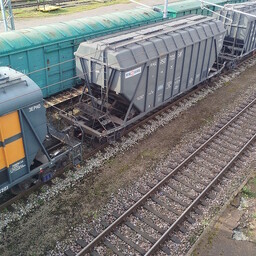
Closing road border crossings between Estonia and Russia is unlikely to lead to growth in rail freight, according to Eesti Raudtee, Estonia's state-owned railway company. The report comes from ERR radio news. The Estonian government plans to close the border with Russia from 1 December.
Eesti Raudtee says that redirecting cargo to rail is theoretically possible, but in practice the geopolitical situation and the limits of Russian railway infrastructure stand in the way.
Rail freight already at a low level
Rail freight in Estonia is already at a historic low. About three million tonnes of cargo moved over Eesti Raudtee's infrastructure in 2025, compared with 12.7 million tonnes in 2021.
Eesti Raudtee commercial director Artur Raihmann does not expect the closure of road crossings to change this. He says such schemes are theoretically possible, but in practice he would be more cautious. In his words, the likelihood that rail volumes will rise after the road crossings close is fairly small, since nothing prevents them from growing already now. Road and rail transport generally do not compete with each other.
Trucks on rail platforms
One possible option would be to carry trucks across the border on railway platforms. However, closing road crossings alone is not enough, because restrictions on cargo movement through the Russian rail network remain in place.
Raihmann says similar schemes were discussed even before Russia's war against Ukraine. For many years, the idea of moving freight trailers by rail from the Port of Muuga through the Baltic states to Poland and on to Central Europe was considered, but the project was never carried out for various reasons. He explains that the obstacle is both geopolitics and the real capacity limits of Russian railways.
Specialists therefore conclude that ending road traffic across the border will not in itself shift freight flows to rail. That would require separate logistics solutions and suitable conditions, which are currently absent.