ECB President: Digital euro will not replace cash, parliament advances talks
European Central Bank President Christine Lagarde told Euronews that the digital euro will complement, not replace, cash, and that the aim is not to monitor payments, as the European Parliament approved its negotiating mandate.
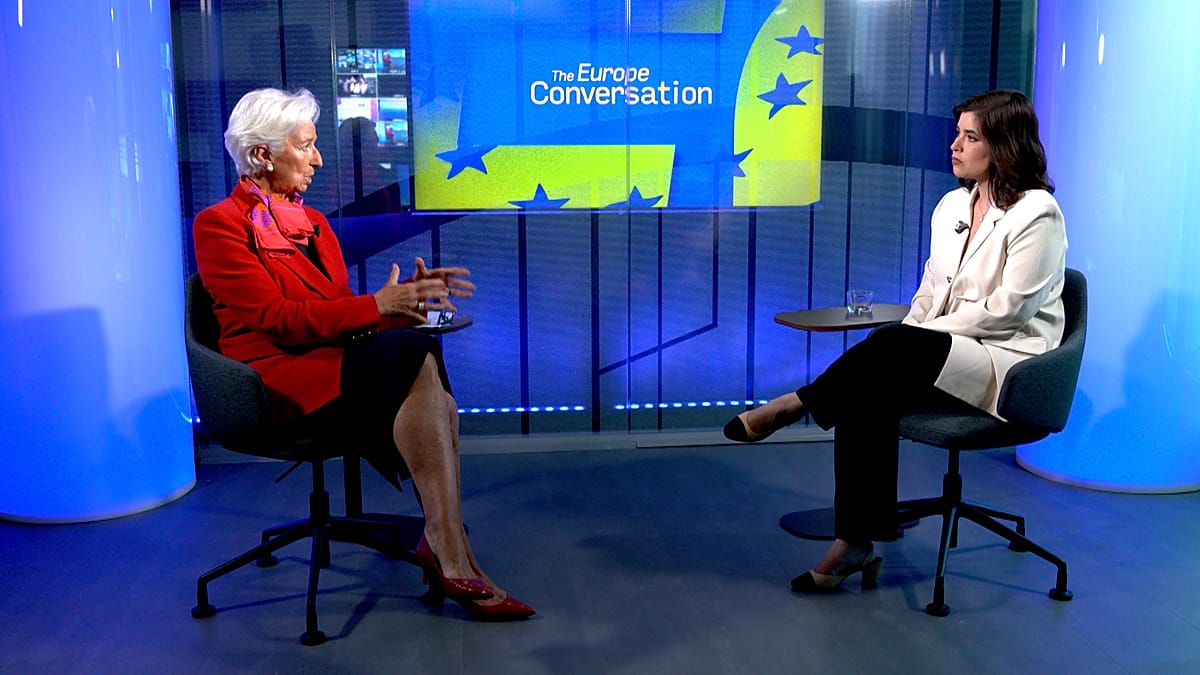
European Central Bank (ECB) President Christine Lagarde has stated that the digital euro is intended to complement cash, not replace it, rejecting suggestions that the project is designed to surveil citizens. Her remarks came after the European Parliament on Thursday approved its negotiating mandate, bringing legislation a step closer to adoption by end-2026 after months of stalled talks.
Initial proposals faced criticism from members of the European Parliament who argued that a digital euro could undermine privacy and eventually diminish the role of banknotes and coins. In an exclusive interview with Euronews's "The Europe Conversation", Lagarde said: "Let me celebrate the fact that the Parliament has endorsed massively the mandate for these negotiations that will hopefully be concluded by December."
The ECB president explained that the digital euro aims to bring public money – currently available mainly as cash – into the digital age amid growing competition among jurisdictions. Like physical currency, it would have legal tender status. "Cash and the digital euro will both be legal tender, which means that nowhere in Europe can someone say, 'Sorry, I'm not taking your banknotes'," Lagarde said.
She also announced that the ECB will unveil a new banknote strategy by year-end. "We will have a set of proposals for the new design and the new face of our banknotes. Cash will not go away, it will be rejuvenated," she stated. At its core, the digital euro is intended to strengthen Europe's strategic autonomy in payments and transaction processing. Most card payments in Europe are processed through foreign-owned networks, prompting EU policymakers to push for a home-grown alternative as geopolitical tensions highlight dependence on US-based providers. "The best thing I know is a European solution. At the moment, we do not have that. So, if you pay, in most instances – in 60% of cases – you use payment infrastructure that is under foreign capital," Lagarde said, citing ECB data on card payments. "We depend predominantly on US, but also sometimes Chinese, networks to organise payments. We need to have a European solution because we want to be sovereign at home."