Filmmaker Ēķis warns of fake profiles fueling social division online
Director Andrejs Ēķis has warned on Facebook about suspicious profiles using Latvian-sounding names and innocent imagery to stoke political conflict, comparing the tactic to the ancient Trojan horse.
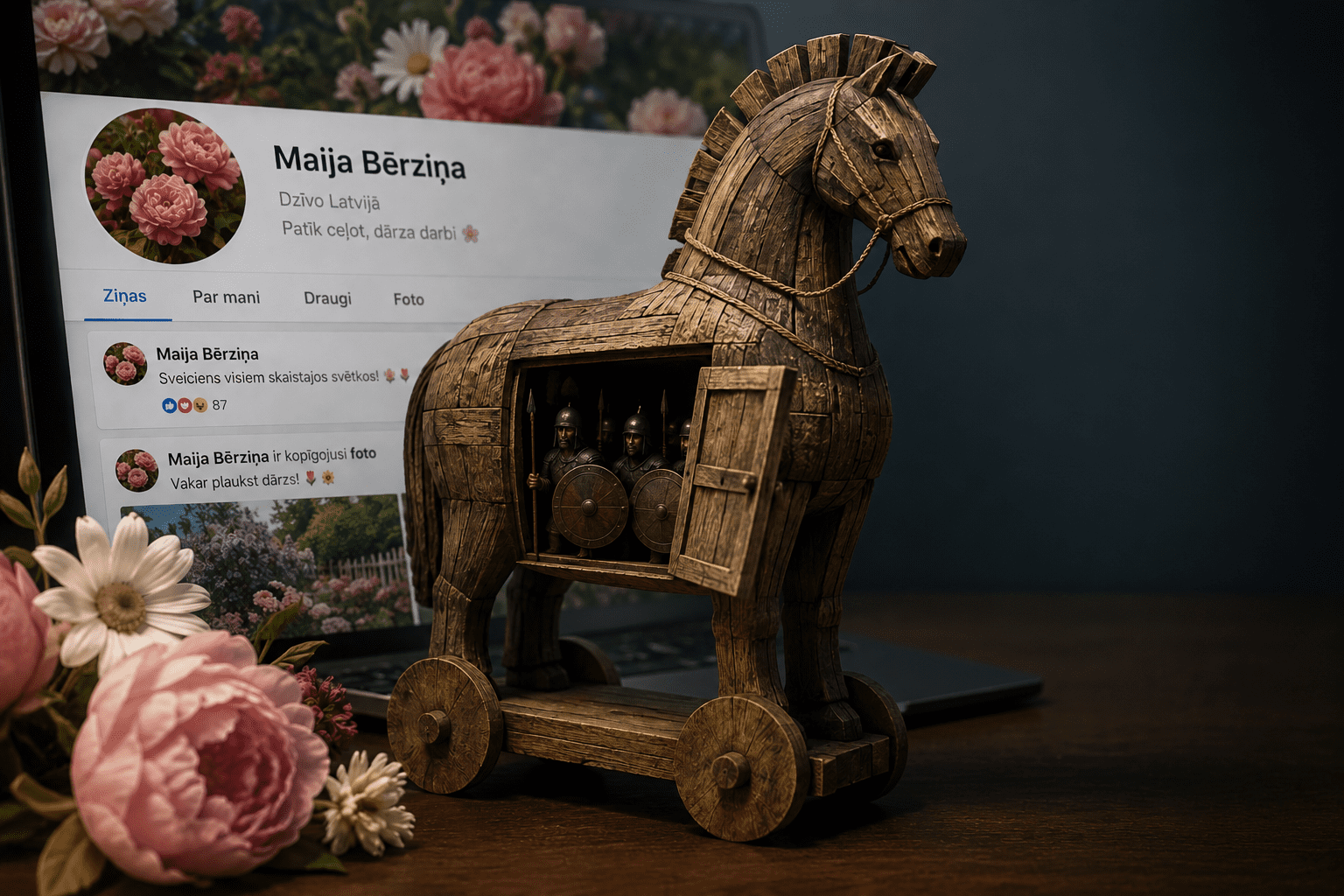
Latvian film director and producer Andrejs Ēķis has published a lengthy Facebook post warning about profiles on social media that pose as ordinary users while actually working to deepen divisions in society. He frames the phenomenon using the Trojan horse metaphor: just as the ancient Greeks took Troy not by force but by getting the Trojans to pull the wooden horse inside the city themselves, today's "Trojan horse" can hide behind a Latvian name, a photo of flowers and a carefully crafted biography.
A recurring pattern
According to Ēķis, a repeating pattern can be seen across several suspicious profiles. First, a believable persona is built using a Latvian-sounding name, everyday posts and a specific hobby such as gardening or fishing. Later, the same profile becomes increasingly active in commenting on political topics. He argues such profiles are not designed to invent new problems but to find existing rifts in society — between Latvians and Russians, Riga and the countryside, the public and the government — and widen them.
Ēķis says rhetoric around Ukraine stands out in particular, citing recurring questions about why Ukrainian flags are displayed in Latvia, why financial support is given to Ukraine, and why funds are allegedly not directed to Latvia's own citizens instead.
Not every critic is a troll
Ēķis stresses that not everyone expressing such views online is automatically a paid troll or a fake account. Some, he says, are genuine people who have absorbed certain propaganda narratives and continue spreading them on their own, without needing direction or instructions.
He urges people to critically assess suspicious profiles and their behavior, pointing to warning signs such as a recently created account that is unusually active in political discussions, a preponderance of negative comments, and recurring attacks on Ukraine, NATO, the Latvian state or its allies.
Ēķis concludes that the real victory for Kremlin propaganda is not a moment when everyone starts loving Putin, but when people begin to despise their own state, distrust every institution, view allies as enemies, and see each other as traitors.

/nginx/o/2026/08/06/17830698t1h9c25.jpg)