Ministry of Economics begins drafting rules on fuel station business continuity
Latvia's Ministry of Economics has started drafting Cabinet regulations that will determine which petrol stations must ensure continued operation during power and communications outages. The rules must be adopted by 28 February 2027.
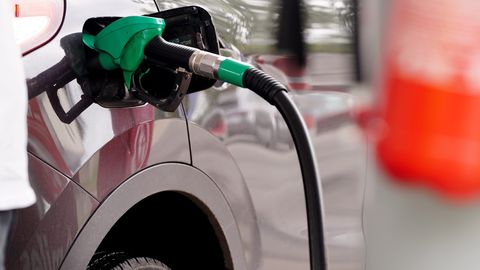
Latvia's Ministry of Economics has begun drafting Cabinet of Ministers regulations that will specify which fuel stations must meet business continuity requirements. These include providing alternative power supply, telecommunications and fuel availability. The ministry informed the news agency LETA on 18 November.
The ministry said the regulations must be adopted by 28 February 2027. Work has now started, and the drafting process will involve coordination with industry representatives and the institutions concerned. While the draft is still being prepared and agreed, the ministry cannot provide further details on the requirements it will contain.
Amendments to the law
On 22 October, the Saeima, Latvia's parliament, adopted amendments to the Energy Law in the second and final reading. They require a retail fuel seller operating a station that meets certain continuity criteria to put in place the necessary measures. These include alternative electricity and electronic communications solutions, so that fuel can still be dispensed when power or communications services are disrupted.
The Cabinet will decide which stations the requirements apply to, as well as the specific measures, how they are to be introduced and the deadlines. The obligations in the law are generally to be met by 30 June 2028, although the government may set earlier deadlines for certain groups.
Why the issue came up
The question of keeping fuel stations running during power and communications failures became pressing after a storm in August. In several parts of Latvia, outages of electricity and electronic communications made it impossible to buy fuel.
Fuel retailers AS "Virši-A", AS "Viada Baltija", "Circle K Latvia" and SIA "Neste Latvia" said that installing generators and satellite internet across the whole station network would require substantial investment. In their view, requiring all stations to be equipped in this way without state co-financing would be disproportionate.