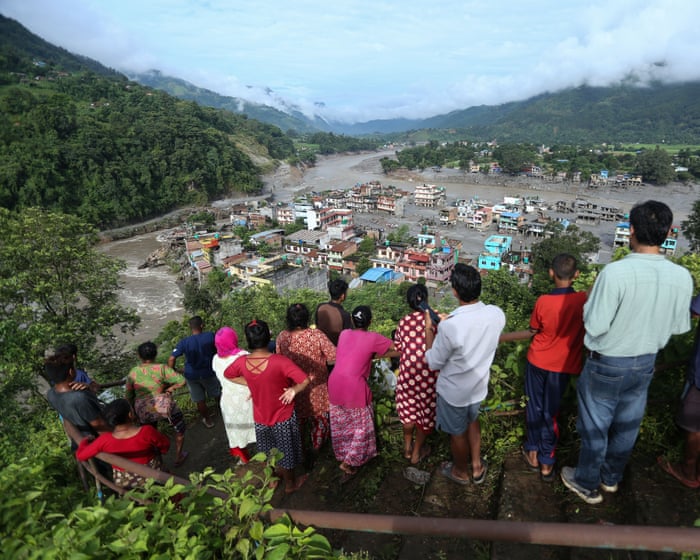
Experts Say Nepal's Glacier Collapse Was Hard to Foresee
Following a disaster triggered by a glacier collapse in Nepal, researchers say such events are difficult to predict and detect in advance, and recommend banning construction on floodplains along with clearly marked evacuation routes.

A glacier collapse in Nepal that triggered a destructive disaster has prompted researchers to examine how the risks of similar events could be reduced in the future. According to disaster experts, occurrences of this kind are especially hard to forecast and detect early, since current monitoring and warning methods cannot reliably predict when or where a glacier collapse might occur.
Because of these limitations in forecasting and detection, researchers argue that the focus should not rest solely on improving early-warning systems. Instead, they say preventive measures that reduce potential harm regardless of whether a specific event can be anticipated deserve equal attention.
One of the main recommendations is to prohibit new construction of buildings and other infrastructure in areas exposed to flooding. Such a measure would limit the scale of potential damage should a similar flood strike again in the future.
A second recommendation concerns evacuation planning. Researchers are calling for clearly marked evacuation routes in at-risk areas, so that local residents know where to seek safety if an immediate threat arises. Experts note that even when an event itself cannot be precisely predicted, thorough preparation and a clear response plan can significantly reduce the danger to people living in these areas.
Overall, the experts' recommendations suggest that coping with hard-to-predict natural disasters depends not only on technological solutions but also on careful land-use planning and public preparedness.