Experts: Boosting R&D Could Help Estonia Tackle Rising Public Debt
Estonia's economic growth has stalled and public debt is rising. Experts suggest that increasing research and development spending could restore growth without adding to the debt burden.

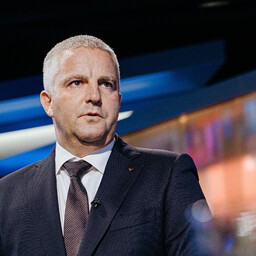
Estonia's economy is unaccustomed to a mild but prolonged downturn or zero growth, according to Peeter Luikmel, an economist at the Bank of Estonia. After regaining independence, downturns were sharp but followed by quick recovery. Now the country is stuck at around 70–80% of the EU average income level. Low labor costs are no longer an advantage, and access to the EU single market has been fully exploited. Proximity to wealthier neighbors like Finland and Scandinavia drives up prices, while output per worker has nearly flatlined.
Luikmel argues that Estonia needs to invest more in research and development (R&D). Currently, the country spends about 2% of GDP on R&D, compared with over 3% in Finland and Sweden. An additional percentage point could move Estonia into the ranks of wealthier countries within 15–20 years. Otherwise, it risks facing price levels near 125% of the EU average while income remains at 80%.
At the same time, public debt is rising. Luikmel notes that countries with lower debt tend to grow faster, and Estonia's debt advantage is eroding. He warns that geopolitical events could sharply increase interest payments, potentially reaching €600 million annually in four to five years – equal to the current funding for the country's three largest universities. To avoid this, innovation spending must increase without raising debt. Alternative revenue sources, such as progressive income taxation or exempting R&D from corporate income tax, were discussed at the conference.
Ruth Oltjer, founder of Chemi-Pharm, highlighted bureaucratic barriers to innovation. During the pandemic, her company developed a colostrum-based protective spray, but authorities denied international registration because it did not fit existing frameworks. She called for a more supportive environment where officials facilitate rather than block new ideas. To bridge the gap between business and academia, she suggested open laboratories where entrepreneurs and researchers can work side by side, fostering mutual understanding and quicker innovation.
These proposals were presented on June 5 at the Delta Economic Conference in Tartu.