Expert: US-Backed Security Guarantees for Ukraine May Prove as Hollow as Poland's in 1939
Political commentator Eliot Cohen warns in The Atlantic that US-backed security guarantees for Ukraine, lacking real military force and the will to use it, may prove as worthless as Britain's guarantees to Poland in 1939.
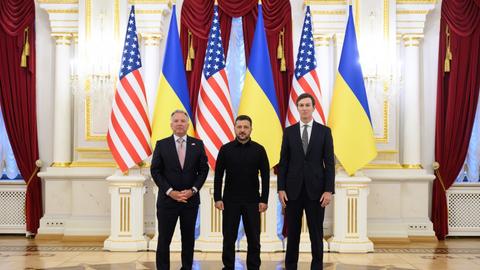
The new security guarantees for Ukraine promoted by the United States may turn out to be as meaningless as the guarantees Britain gave Poland in 1939. That is the argument made in The Atlantic by political commentator Eliot Cohen, an honorary professor at Johns Hopkins University in the US. His assessment concerns the negotiations over Russia's war against Ukraine and the European security order that is meant to follow.
Criticism of Kushner's approach
Cohen is dissatisfied with the approach of Jared Kushner, son-in-law of US President Donald Trump, to the talks. In an interview and a post on the social network X, Kushner called Russian President Vladimir Putin a "great master of politics" and Russian negotiator Kirill Dmitriev an "incredible friend". He described the war as the result of individual leaders' mistaken decisions rather than deliberate Russian aggression.
Towards Ukraine and America's European partners, by contrast, Kushner is considerably more critical. He accused Ukrainians of "sabotaging" the previous round of talks over an alleged attack on one of Putin's residences, even though the CIA, the US Central Intelligence Agency, had earlier refuted that report. European countries were left out of the talks because of Moscow's position.
Guarantees without force
Cohen considers the Trump administration's wish to build a new European security system, without properly weighing allies' interests, especially dangerous. One of Kushner's proposals envisages security guarantees for Ukraine modelled on NATO's Article 5, but without membership in the alliance. Article 5 provides for collective defence, yet even it lets countries decide for themselves what measures to take in response to an attack.
"Guarantees, if there is no ability to carry them out, are as meaningless as those Britain gave Poland in the summer of 1939," Cohen stresses. In his view, real deterrence is possible only with genuine military force and the political readiness to use it, and that is what Washington's current initiatives lack.
Earlier statements
Kushner, the US president's special envoy, had earlier said Washington had managed to convince Moscow of the need to provide Ukraine with guarantees based on principles similar to Article 5 of the NATO treaty. According to him, Russia broadly "is satisfied" with such an approach, although considerable skepticism and distrust remain in the Kremlin. Ukrainian President Volodymyr Zelensky stressed that such guarantees must be backed by a real military presence, including US and European partner bases in Ukraine and a clear response mechanism in case of new Russian aggression.