Pabriks: No room for illusions — hybrid threats on Latvia's border will continue
After the Estonian foreign minister warned about peak pressure on the Latvia–Belarus border, expert Artis Pabriks says Latvia must keep fortifying the border, involve national defence conscripts, and criticises the EU's restrictive approach.
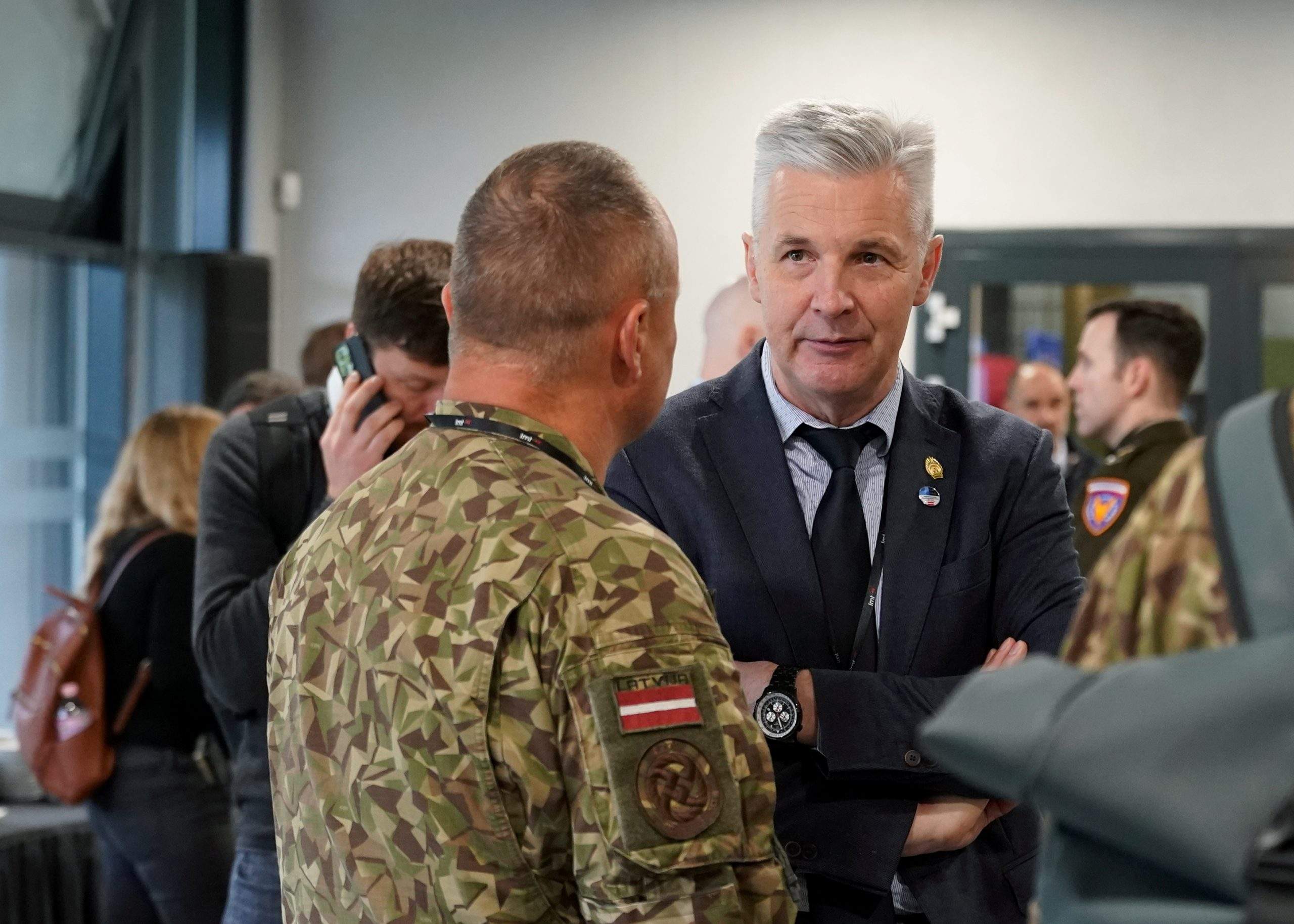
After Estonia's foreign minister personally visited the Latvia–Belarus border and said the situation there was at a peak, Artis Pabriks, director of the Northern Europe Policy Centre and head of the Military Technologies, Drones and Robotics Association, has shared his assessment. He acknowledges the border situation is far from easy and notes that the hybrid threat, in which Belarus, together with Russian special services, recruits and sends migrants across the border, has persisted for several years.
Pabriks says he understands the Estonian minister's concerns. He points out that Estonia has not faced similar pressure on its own border with Russia, so the experience gained while helping Latvia could prove valuable if Estonia ever encounters a comparable crisis. The deployment of Estonian reinforcements and police to Latvia is therefore both assistance and a form of learning.
On Latvia's own response, Pabriks stresses that border fortification must continue. This requires technical tools, including drones, and better use of technology. Drones could also be used to monitor migrants, but more personnel are still needed at the border.
He also draws attention to a specific shortcoming: conscription for national defence service does not currently apply to border guard and interior service positions, although this was proposed in 2022. He argues that the change should be made urgently so that conscripts can supplement the border guard.
Pabriks is also critical of European Union officials, saying many have long lived in a “rose-coloured cloud” regarding migrants and their rights. He recalls that a former Frontex director was dismissed for being unwilling to take a tougher stance against illegal border crossings. Four years ago, when Latvia asked the European Commission for help, the response was an offer to build migrant camps rather than strengthen the border. More recently, border guards were not allowed to use EU funds to purchase combat drones, only surveillance drones. Pabriks stresses that this is not about attacking migrants but about an overly restrictive approach.
As for Belarus, Pabriks expects more hybrid actions, including migrant flows, cable incidents, diversions and communication operations. He warns against illusions of friendly diplomatic dialogue, saying the neighbour remains aggressive and willing to use dirty methods.