Andy Burnham's In-Tray: The Challenges Facing the New UK PM
Andy Burnham becomes UK prime minister on Monday, inheriting a stagnant economy, a strained relationship with China, and a Labour party trailing in the polls.

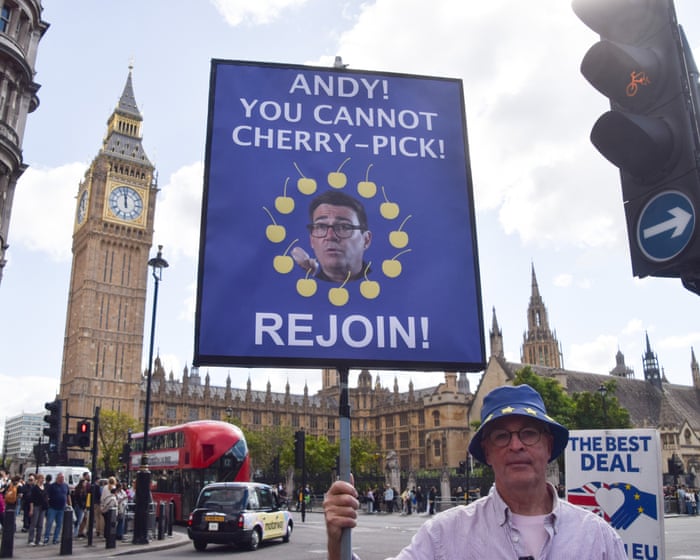
Andy Burnham, who becomes the United Kingdom’s next prime minister on Monday, faces a roster of challenges as the country’s seventh leader in a decade. He was overwhelmingly backed as Labour leader after current Prime Minister Keir Starmer resigned last month.
Experts say the incoming prime minister will inherit an economy that has barely grown in two decades and a challenging geopolitical environment. He also has to deal with a marked decrease in Labour’s popularity, with the party trailing the right-wing Reform UK in the polls for 18 months. Burnham has relatively little fiscal room for manoeuvre, with new spending having to be raised via taxation rather than borrowing, though there may be scope for hypothecated spending tied to a clear purpose, such as defence bonds.
The government spent around 110 billion British pounds on debt interest in 2025-26 alone, about eight percent of all public spending. Borrowing has run higher than planned this year, and taxes are forecast to reach their highest share of the economy since World War II by the end of the decade.
Burnham’s record in Manchester, including the city’s fare-capped bus network, suggests meaningful reforms needn’t always come with a big price tag. However, scaling that up nationally may be harder, and he must balance showing he is aware of the country outside London without focusing solely on Manchester. Living standards have stagnated and services have eroded since 2008, so people want to see real improvements.
Burnham’s in-tray is complicated further by a diplomatic dispute that flared days before he takes office. The government fully nationalised British Steel’s Scunthorpe works, a year after taking control when Chinese owner Jingye Group planned to close it. Jingye has vowed to pursue full compensation through legal means, while China’s Ministry of Commerce accused London of undermining Chinese investor confidence. This leaves Burnham managing a strained relationship with China from day one.
Much of what shapes a prime minister’s fortunes lies outside their control, including the war in Ukraine, Brexit, and the COVID-19 pandemic. Dependence on the US for defence and technology rules out any dramatic reconfiguring of British-US ties. European Union relations may get less attention under Burnham, who is expected to be more domestically focused. On Gaza, Burnham has apologised for the previous government’s stance and may be less supportive of Israel than Starmer was, but turning words into policy depends heavily on events. He is unlikely to risk a rupture with Washington over US bases in Britain.
Reports suggest Burnham is likely to prioritise defence over welfare spending, dial down the net-zero programme, and allow new North Sea oil and gas drilling. He also voted to make the asylum system more brutal. Labour’s vote fell from 12.9 million in 2017 to 9.7 million under Starmer, and its support base is narrowing towards wealthier, less diverse parts of the electorate, with the Greens now drawing disillusioned voters on the left.
Political polarisation is widespread. Katwala argues that fairness should be framed as universal rather than a concession to certain groups. Recent polls put Reform UK at 24-26 percent and Labour close behind, a turnaround from earlier in the year. By-election results suggest a broad anti-Reform coalition and tactical voting exist, which should strengthen Labour. However, that could change if things go badly for Burnham.