European Parliament votes to start talks on digital euro
MEPs approved the launch of negotiations with the EU Council on a digital euro, aiming to reduce reliance on third-country payment providers and enhance financial inclusion.
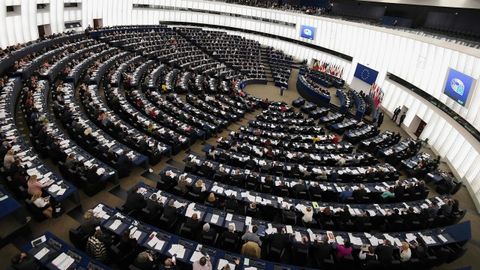
The European Parliament on Thursday voted 416 in favor, 169 against, with 22 abstentions, to begin legislative negotiations with the Council of the European Union on introducing a digital euro. The initiative envisions a central bank digital currency that would complement physical cash, offering a secure payment method when cash is not feasible. Its goals include reducing dependence on non-EU payment service providers, fostering financial inclusion, boosting EU-wide payment solutions, and strengthening the bloc's strategic autonomy in the digital economy.
Trilogue talks between the European Commission, the Parliament, and the Council are set to start on Monday. According to Maija Celmiņa, adviser to EU Commissioner Valdis Dombrovskis, a swift process is not expected, and a final agreement may not be reached until after the summer. The Parliament's negotiating team will be led by rapporteur Fernando Navarrete Rojas from the European People's Party, with the first round of talks under the Irish presidency.
The Parliament's position defines the digital euro as a new form of electronic money issued by the European Central Bank, operating both online and offline. Privacy safeguards include transaction verification without revealing personal data and processing only necessary information. Most businesses would be required to accept the digital euro, with exceptions for self-employed individuals and micro-enterprises that do not accept other digital payments. Basic services like account opening, holding, and managing funds would be free, but a limit would be set on the amount an individual can hold to protect financial stability.
MEPs also propose allowing banks and payment service providers from non-eurozone EU countries to distribute the digital euro. Eurozone states must ensure cash availability, businesses cannot ban cash use, and member states must regularly monitor cash access, paying special attention to vulnerable groups such as the elderly, low-income individuals, and those without traditional banking access.