EU delays decision on lifting Brazilian chicken ban
EU member states on Tuesday postponed a vote on lifting the ban on Brazilian chicken imports after several countries asked the European Commission for more clarification on Brazil's compliance with antimicrobial rules. A new meeting is planned for early December.
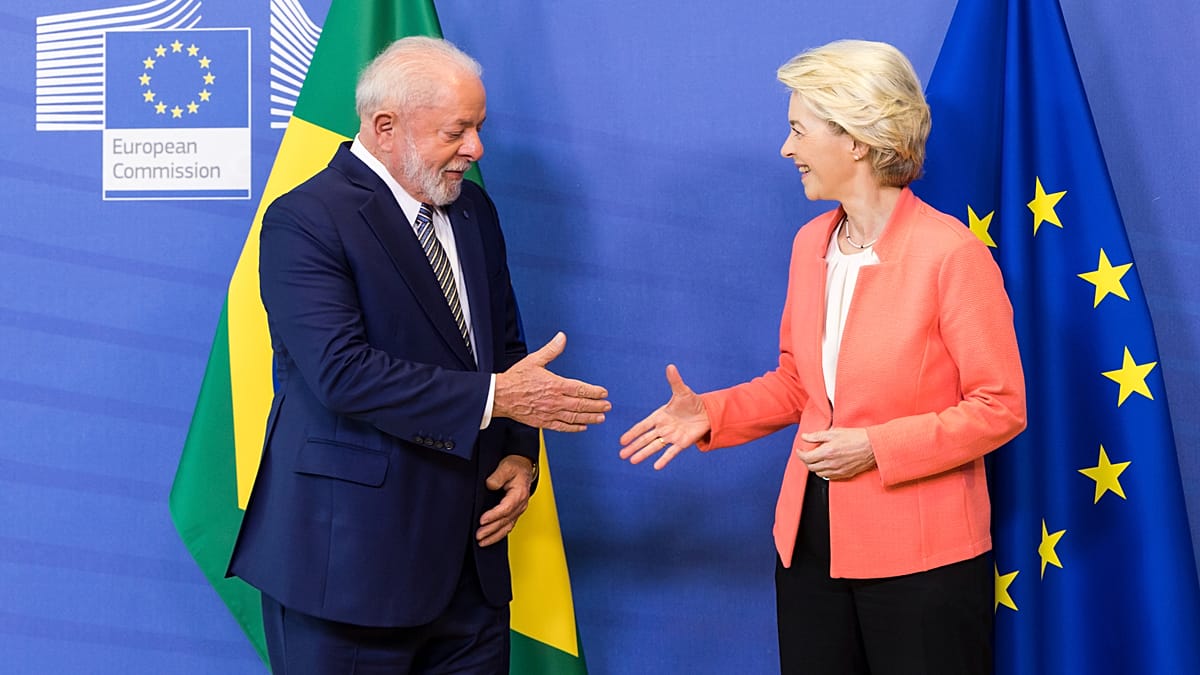
The 27 European Union member states on Tuesday, 17 November, postponed a vote on lifting the ban on Brazilian chicken imports. Several countries asked the European Commission, the EU's executive body, for further clarification on whether Brazil complies with EU rules on antimicrobial use. The decision matters for Brazilian meat exporters and EU farmers alike, as it affects trade with a major supplier of agricultural goods.
The EU banned Brazilian meat imports in September, citing Brazil's use of antimicrobials to stimulate animal growth. The ban, which followed a vote by national experts in May, covers beef, poultry, eggs and honey. It angered Brasilia, since it came only a few months after the contentious trade deal with Mercosur, the South American trade bloc, provisionally entered into force.
Commission spokesperson Eva Hrncirova said a number of member states had requested further clarifications on the system Brazil has put in place. The Commission would "take the time to address these comments and questions" before a new meeting in early December. Meanwhile, an EU audit in early September found that Brazil's poultry control system was operating effectively.
Divisions among EU countries
Imports of Brazilian meat remain a divisive issue within the bloc. Several countries, led by France, strongly oppose the Mercosur agreement signed in January this year. EU farmers fear dumping because of lower production standards in the signatory countries — Argentina, Brazil, Paraguay and Uruguay — particularly on health and phytosanitary rules.
To address these concerns, the deal includes quotas capping tariff-free access for sensitive agricultural products. Annual beef imports are limited to 99,000 tonnes at a reduced tariff of 7.5%, equivalent to 1.5% of EU production. Poultry imports are capped at 180,000 tonnes a year, or 1.3% of EU output.
Ratification of the deal has been delayed since the European Parliament referred it to the Court of Justice of the European Union, questioning its legality. Under pressure from Mercosur countries and member states backing the deal, notably Spain and Germany, the Commission decided in May to implement the agreement provisionally pending a ruling by the court.