EU lawmakers urge deeper ties with Canada, from critical minerals to Erasmus+
Four European People's Party members of the European Parliament call for closer EU–Canada cooperation in trade, defence, education and research. They note that negotiations on Canada joining Erasmus+ have already begun.
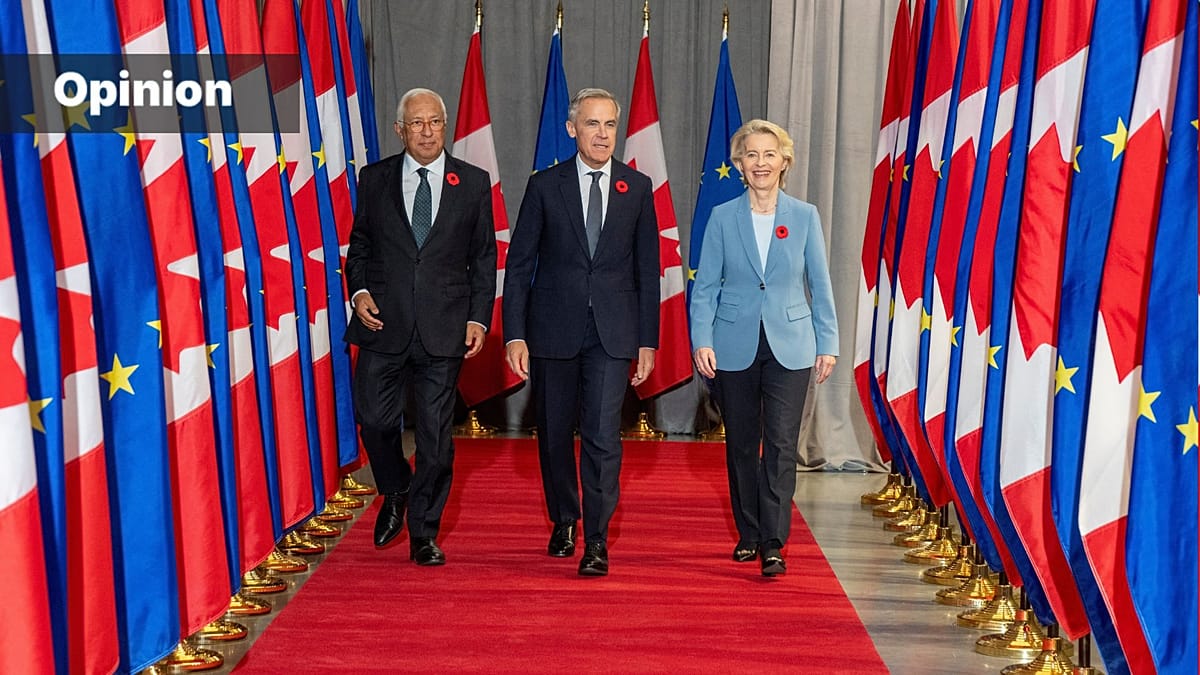
Four members of the European Parliament from the European People's Party (EPP), the Parliament's largest political group, published an opinion piece on 20 November urging deeper cooperation between the European Union and Canada on trade, critical raw materials, defence, education and research. The authors are Andrzej Halicki, Zeljana Zovko, Łukasz Kohut and Loucas Fourlas. The article reflects their own views, not the editorial position of Euronews.
Trade and raw materials
The lawmakers say bilateral trade in goods and services has grown by about 80% since the provisional application of the Comprehensive Economic and Trade Agreement (CETA) between Canada and the EU, rising from €72.1 billion in 2016 to €130 billion in 2025.
Europe wants to reduce its dependence on China, particularly for critical raw materials. In the authors' view, Canada is one of few democratic partners able to supply the EU with minerals needed for batteries, semiconductors, defence, aerospace, renewable energy and telecommunications. Canada is also a major producer of uranium, cobalt, nickel and zinc, and the world's leading producer of potash.
Security and defence
The piece stresses that Canada supports Ukraine and leads NATO operations in Latvia. Canada's defence spending reached 2.0% of GDP this year, and its new federal budget sets a path to more than 4% by the end of the decade. This year Canada also became the first non-European country to join SAFE, the €150 billion defence procurement instrument.
Education and research
Following the launch of formal negotiations at the recent Canada–EU Summit in Montréal, Canada is poised to become the first non-European country associated with the Erasmus+ exchange programme. Canada has also been associated with Pillar II of the Horizon Europe research programme since 2024, and talks on deeper participation have begun.
The authors add that the EPP, as the strongest political force in the EU institutions, wants to help drive the relationship forward.