Photo from Riga's Central Market recalls beer and oil prices from 2004
A photo from Riga's Central Market showing 2004 grocery prices has gone viral on social media, sparking nostalgia and debate over cheap beer, oil and other goods.
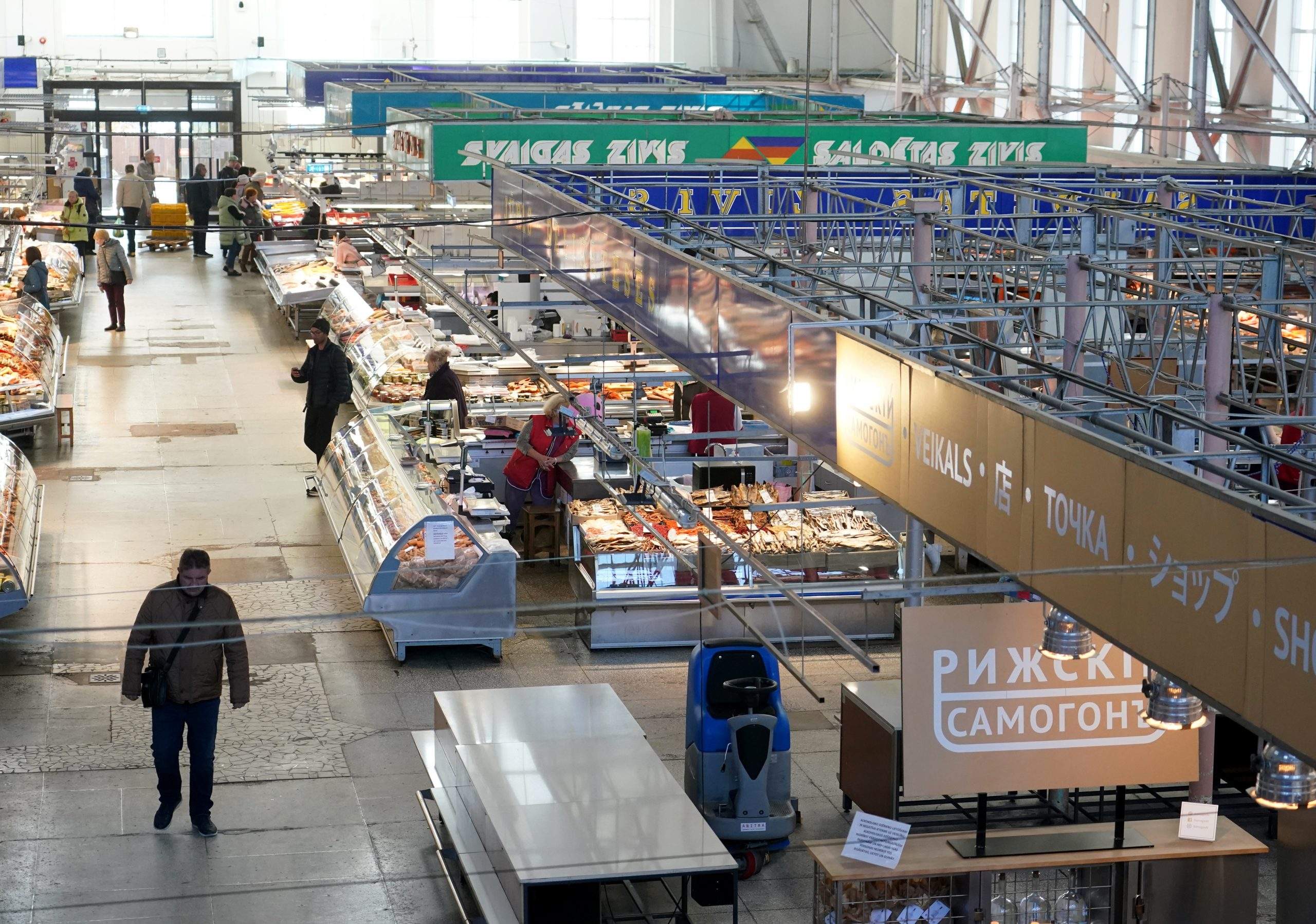
A photograph taken at the Riga Central Market pavilion has drawn wide attention on social media after showing grocery prices from 2004. The image, capturing price tags from two decades ago, has left many users surprised and nostalgic.
The photo shows a fairly varied selection of groceries. "Alojas" potato starch cost 28 santims at the time, while various loose products were priced from roughly 35 to 99 santims. Bottles of vegetable oil are also clearly visible, with most priced between 58 and 65 santims, though some reached 75–76 santims.
Beer prices draw the most attention
The beer shelf attracted the most comments. A half-litre bottle of "Aldaris" beer cost around 30–33 santims depending on the variety, while "Bauskas" beer cost 37 santims. Two-litre plastic bottles of beer, including "Rīgas", "Vārpa" and "Brenda" brands, were sold for roughly 70 to 92 santims.
In the comments, users shared their own memories — some recalled even lower prices, such as a two-litre bottle of beer for around 80 santims or less, while others remembered specific popular beer brands from that era. Not everyone found the memory pleasant, however — some admitted the taste of the beer back then no longer seems worth reminiscing about.
Debate over cost of living then and now
The online conversation quickly turned into a broader debate about whether life was truly cheaper in 2004. Commenters cited various wage levels from that time, ranging from around 35 to 80 lats, while others noted that certain professions allowed people to earn considerably more.
Several users pointed out that price tags alone cannot indicate the standard of living at the time — what matters more is how many goods a person could afford with their wage then compared to now. The discussion also included a reminder that wages, prices and the overall economic situation are constantly changing over time.


/nginx/o/2026/09/26/17940681t1h6dfc.jpg)