French wildfires: how a 170-year-old decision fuelled this summer's catastrophe
This summer France suffered its largest recorded wildfires, forcing the biggest peacetime evacuation since the second world war and likely producing the country's first fire-generated thundercloud. The roots trace back to an 1857 decision to plant pine forests near Bordeaux, compounded by modern climate change.
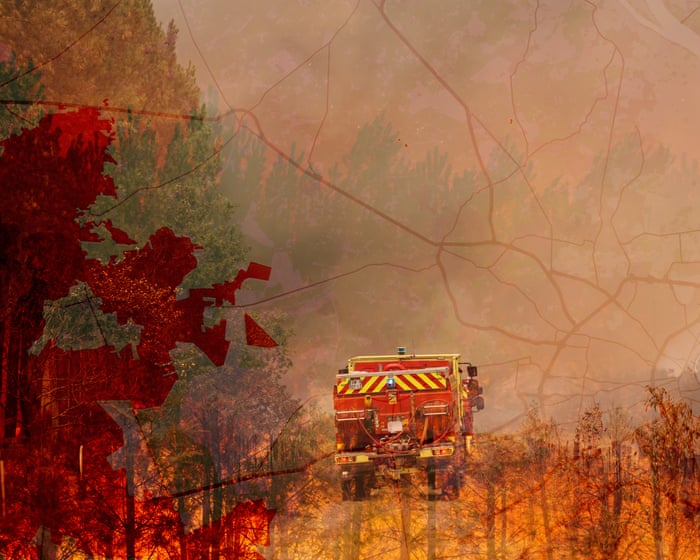
France experienced its most destructive wildfires on record this summer, burning more land than ever documented and displacing more people than at any point since the second world war. Scientists believe the blaze produced the country's first known pyrocumulonimbus, or fire-generated thundercloud. Smoke from the largest fire in nearly 80 years travelled 200km to choke the city of Limoges with pollution levels worse than Delhi's smoggiest day last year.
Roots in the 19th century
The fire that swept through forests near Bordeaux in late July was the product of a much longer history. An 1857 decree by Napoleon III forced landowners to drain swampy coastal wetlands and plant them with maritime pines, creating Europe's largest human-made forest, the Landes, which today employs 30,000 people. But pines, which make up 90% of the forest's trees, contain resin that burns like petrol and shed needles that blanket the ground with flammable fuel — conditions that also caused a 1949 fire that killed 82 people, mostly volunteer firefighters.
The role of climate change
Since 1857, humanity has released 1.85tn tonnes of carbon into the atmosphere, warming Europe by 2.4C and raising the risk of extreme heat and drought. A wet winter this year encouraged plant growth, but subsequent heatwaves dried it out, leaving abundant fuel. By mid-July, France recorded both record heat and record-low soil moisture.
How the fire spread
Smoke was first spotted near the village of Saumos on 22 July. Investigators are focused on a faulty machine operated by contractors for utility company Enedis as the likely ignition source. French police have arrested nearly 500 people on suspicion of starting fires since the summer began, about 70% of them believed deliberate. Fanned by wind and a uniform tree canopy from post-storm replanting, the fire spread rapidly, reaching the Cap Ferret peninsula, nine miles away, within 24 hours.
Evacuations and aftermath
Evacuation orders in France and neighbouring Spain eventually covered more than 300,000 people, an unprecedented peacetime displacement in Europe. No one died directly from the Gironde fire, though four firefighters were killed battling separate blazes last month. The fire was eventually contained at 42,000 hectares. Scientists now warn of bark beetle outbreaks and an invasive pine nematode threatening the forest's recovery, while experts call for urgent emissions cuts and more diverse forest management to reduce future risk.