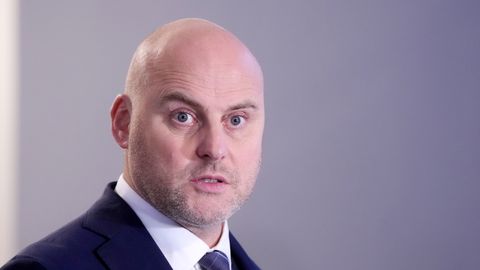
Garisons: NATO Is Slow to Adopt New Drone Technology
Jānis Garisons, head of naval drone maker Newt21, says NATO is still experimenting rather than adopting new unmanned technology. Latvian parliamentary committee chair Raimonds Bergmanis agreed and urged faster creation of drone units.
Unmanned aircraft and robotics have irreversibly changed modern warfare, yet NATO, the North Atlantic military alliance, is lagging in adopting these changes. That was the assessment of Jānis Garisons, chairman of the management board of water-drone manufacturer Newt21, on the TV24 programme “Kārtības rullis” about Latvia's security situation, published on 28 October 2026. Raimonds Bergmanis, chairman of the Latvian parliament's (Saeima) Defence, Internal Affairs and Corruption Prevention Committee, agreed with him.
Criticism of the NATO commander's remarks
Garisons criticised a recent address by NATO's supreme commander, calling it a reflection of the old model of warfare. In his view, Latvia is currently a step ahead of NATO's overall pace in understanding these technologies, but that is not enough.
He warned that if the alliance waits until an adversary attacks, it should expect drones to destroy major radars, ships and other military infrastructure. As an example, Garisons pointed to Ukraine, where, by his account, a 30-kilometre “kill zone” has been created that no one can enter. Drones in air defence, he said, have created a new level that cannot be countered.
Garisons is convinced there is no return to the old order and that the new technologies are here to stay. He rhetorically asked where Latvia's drone units are, while welcoming Germany's recent announcement that it will create specialised drone units.
Bergmanis: speed up unit creation
Bergmanis, agreeing, noted that both Russia and Ukraine have already set up separate robot and drone commands. He stressed that Latvia and its allies should do their utmost to accelerate the creation of such units and integrate them across NATO's defence system.