Google picks Blue Origin's New Glenn rocket for orbital data center satellites
Blue Origin said its New Glenn rocket will launch satellites for Google's Project Suncatcher in 2029. The project aims to place data center computing capacity in space.
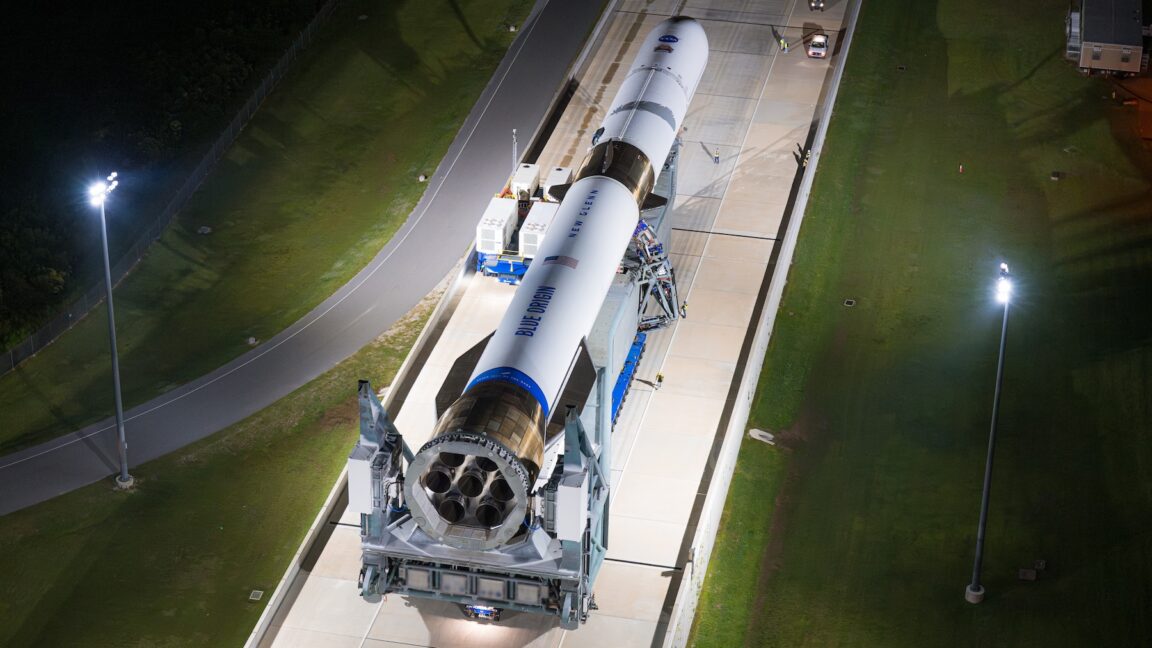
US space company Blue Origin announced on Thursday that its New Glenn heavy-lift rocket will launch satellites for Google's Project Suncatcher in 2029. The program is a research effort by the technology company to build data centers in orbit, and Google describes it as one of its "moonshots", or long-term ambitious bets.
Google disclosed about a year ago that it was working on scalable orbiting data centers. On the planned mission, satellites with computing capacity roughly equal to one data center rack each will be placed into Sun-synchronous orbit, where they can receive almost continuous solar energy.
"Project Suncatcher is a long-term moonshot to scale AI infrastructure in space by tapping into the abundant solar power in orbit," said Travis Beals, Google's senior director of Project Suncatcher, in the news release. He called the dedicated launch a crucial milestone on the company's roadmap.
The rocket and the mission
The Google satellites will fly on the 7×2 variant of New Glenn, the smaller version of the vehicle. New Glenn has launched three times so far. The announcement comes as US commercial heavy-lift rockets, including New Glenn, are filling their capacity through 2030.
The 2029 launch will likely test the ability to network solar-powered satellites equipped with AI chips and demonstrate machine-learning computing in space, making it a technology demonstration. The satellites may weigh several tons. Google did not say which company will build them.
An open question on launch
A bigger challenge for Google may be not the technology itself but whether it can plan a large constellation of orbital data centers in the 2030s without its own launch vehicle. Many questions remain about the economics of such facilities, but almost everyone agrees that without ultra-low-cost heavy-lift launch, space-based data centers cannot compete with terrestrial ones.