On Holodomor Remembrance Day: how Stalin's famine vanished from one Luhansk family's story
Ukraine marks Holodomor Remembrance Day on 28 November. In an opinion essay, Olena Zotova describes how the memory of the famine was distorted and replaced by Russification in her Luhansk family.
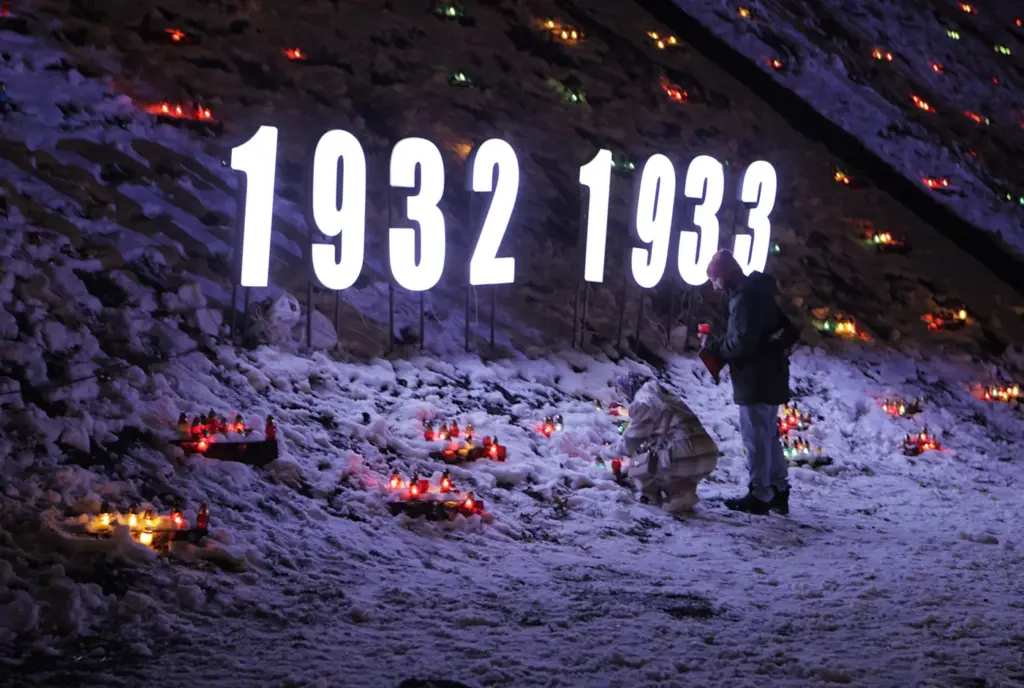
Ukraine on 28 November marks the day of remembrance for victims of the Holodomor, the man-made famine Stalin's regime inflicted on the country in 1932–1933. In Russian-occupied parts of Ukraine, occupiers have been removing Holodomor memorials since 2014. Euromaidan Press has published a personal opinion essay by Olena Zotova on how the memory of the famine was distorted and silenced in her hometown of Luhansk, a city in eastern Ukraine occupied by Russia since 2014.
A ritual with bread
Zotova recalls that her great-grandmother Anastasiia taught her to hold a slice of bread at every meal and look at it as if eating, though actually eating it was optional. The author understood the origin of the habit only decades later. Anastasiia worked as a typist at Khliebostroi, a bread-baking factory, because workers there received bread, and she saved her ration for her daughter Nona.
The word that could not be said
The author's grandmother Nona called the famine "holod" rather than "holodomor." Her recollections blended famine with wartime events, and, following the official Soviet narrative, blamed both on the Nazis alone. One story could be dated: around the summer of 1932, Anastasiia took Nona, then about five and a half, to an open-air market and left her there. The family dog, Jack, brought the child home.
Russification
A 1935 school report card found in March 2026 listed Nona's nationality and native language as Ukrainian, though a teacher had filled it in by hand in Russian. Zotova argues that the Soviets needed 13 years to rewrite Nona's identity, and Nona went on to become a teacher of Russian. The author cites historian Anne Applebaum, who described the assault on Ukrainian national identity and the 1930s famine as parts of the same project. Zotova says Russia is running the same machine again in occupied Luhansk.
The essay reflects the author's views and may not reflect the position of the Euromaidan Press editorial team.