Hong Kong sentences three Tiananmen vigil activists to five to seven years in prison
A Hong Kong court sentenced three long-time organisers of Tiananmen crackdown commemorations to between five and seven years in prison for national security offences, in a case that has drawn international condemnation.
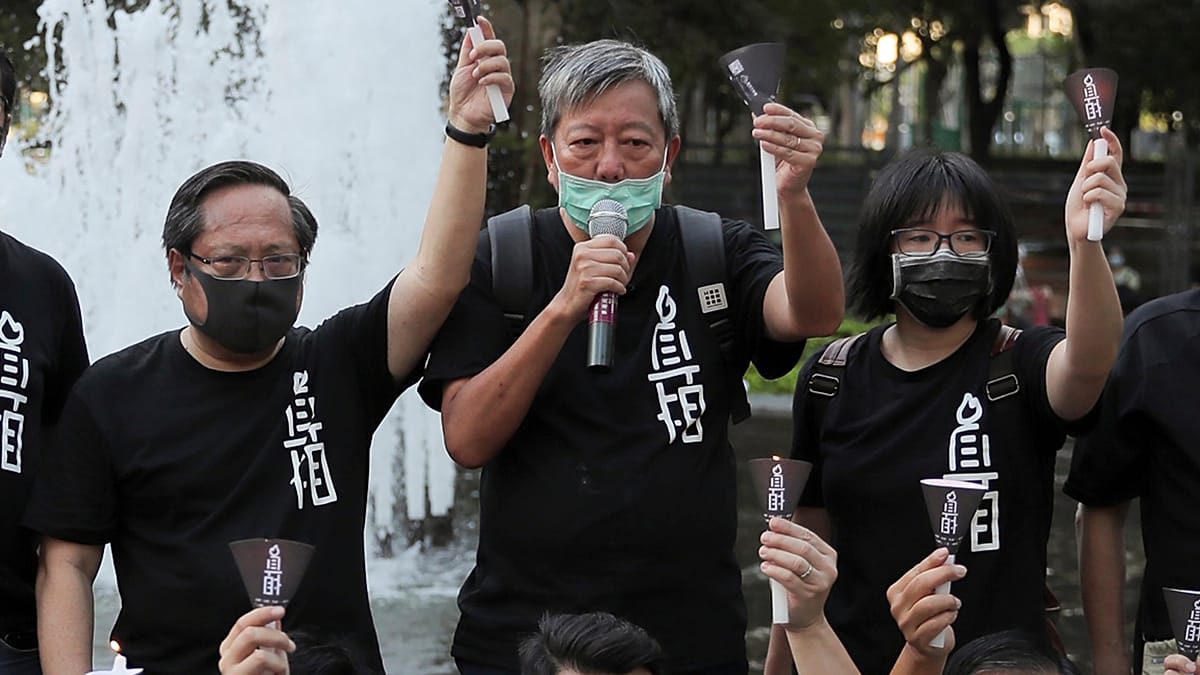
A Hong Kong court on Friday sentenced three activists who for years organised commemorations of the 1989 Tiananmen Square crackdown. Lee Cheuk-yan, 69, and Chow Hang-tung, 41, both of whom pleaded not guilty, received seven years and seven years and three months respectively. Albert Ho, 74, a former lawmaker who pleaded guilty in January, was sentenced to five years and two months. All three have been detained since their initial charges in 2021.
In August, the court found that the activists had violated the Chinese constitution by calling for an end to one-party rule. They were prosecuted under the sweeping national security law imposed on Hong Kong by Beijing, a case that has drawn condemnation from the United Nations, human rights groups and foreign governments.
End of a commemoration tradition
Hong Kong and Macau were once the only places on Chinese soil where public vigils for the victims of the 4 June 1989 crackdown — when Beijing sent troops and tanks against demonstrators calling for political reform — were permitted. Since the national security law took effect, such public commemorations have effectively been banned in Hong Kong.
All three convicted activists previously led the now-disbanded Hong Kong Alliance, which organised the annual candlelight vigil in Victoria Park and ran a museum dedicated to the crackdown. The group also held an annual washing ceremony for the "Pillar of Shame" statue, which was removed from the University of Hong Kong in late 2021, with other local universities later removing similar monuments.
Prosecutors sought the confiscation of both the statue and the museum's archives as evidence. Judge Alex Lee said a decision on the statue's fate would come only after its ownership is resolved. Ahead of sentencing, Chow said the prosecution was an attempt to erase memories of 4 June by reading too much into certain slogans.

/nginx/o/2026/09/10/17910018t1h7cf6.jpg)