Hong Kong Activist Joshua Wong Pleads Guilty in Second National Security Case
Prominent Hong Kong pro-democracy activist Joshua Wong pleaded guilty on Wednesday to conspiring to collude with foreign forces to endanger national security. It is the second prosecution against him under Beijing's 2020 national security law.
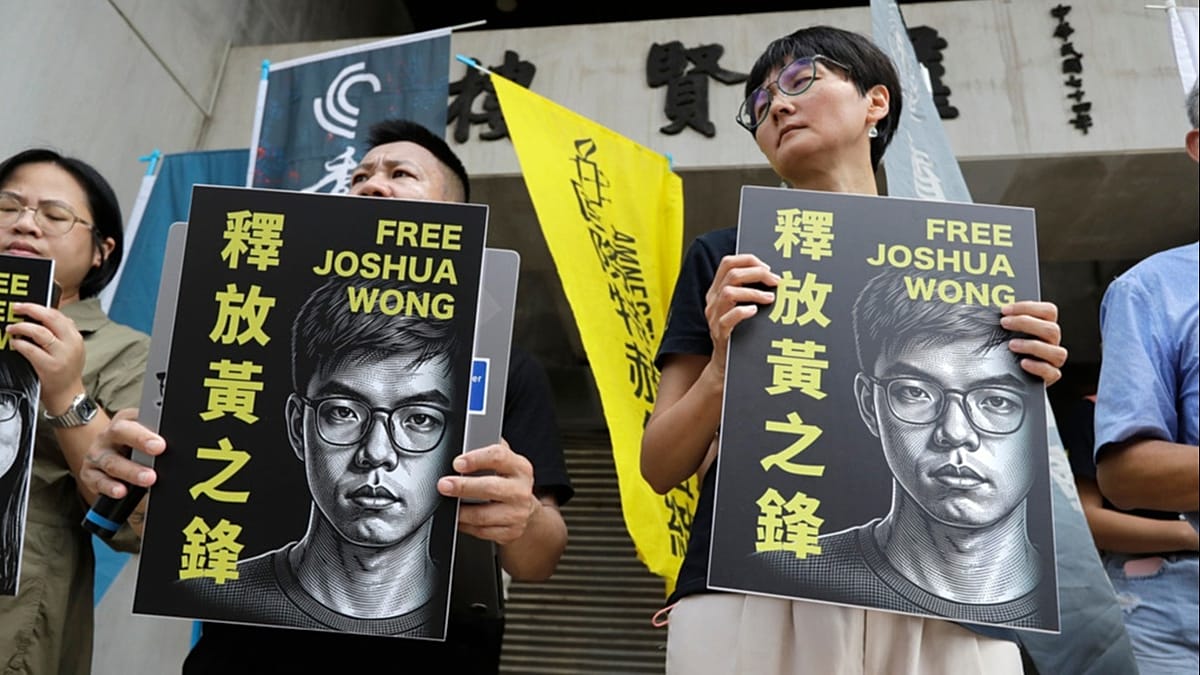
Joshua Wong, 29, a former student leader and one of the most recognisable faces of Hong Kong's pro-democracy movement, pleaded guilty on Wednesday to conspiracy to collude with foreign forces to endanger national security. The charge falls under the national security law Beijing imposed in 2020, introduced a year after mass anti-government protests shook the city.
This marks the second time Wong has faced prosecution under the law. He appeared in court wearing a blue shirt and looked thinner than before. A sentencing date is expected to follow.
The offence carries a prison term of three to ten years, or up to life imprisonment if deemed especially grave. A guilty plea typically allows for a reduced sentence.
Wong is already serving a four-year-and-eight-month sentence from an earlier national security case tied to an unofficial political primary. Before his arrest on the collusion charge in June 2025, he had been expected to be released next January.
Prosecutors alleged that Wong and Nathan Law had agreed years earlier to lobby internationally for Hong Kong's democratic self-determination, including seeking sanctions or other hostile measures from foreign governments against Hong Kong and China. After the security law took effect, Law and others who left Hong Kong continued this work abroad, meeting foreign politicians and organising petitions. Wong, remaining in Hong Kong, supported these efforts through social media, including sharing one of Law's petitions urging digital forensics companies to stop cooperating with police — one company later announced it would halt such services in Hong Kong and China.
Critics say the case reflects authorities' determination to silence prominent dissidents, while Beijing views Wong as a supporter of Hong Kong independence, which it considers a threat to Chinese sovereignty. Wong first rose to prominence in 2012 as a secondary school student leading protests against national education, later becoming a key figure in the 2014 Occupy movement and the 2019 protests.