Houthi advance in Yemen could further destabilise global economy
Iran-backed Houthi rebels have forced the army of Yemen's internationally recognised government to pull back from the Red Sea coast to defend its interim capital, Aden. Analysts warn of higher oil prices and wider security risks.

Iran-backed Houthi rebels, who took over much of Yemen in 2014, have forced the army of the country's internationally recognised government to withdraw from the Red Sea coast. The troops are now focused on defending the interim capital, Aden. The shift is bad news for Yemen's legitimate government, its backer Saudi Arabia and, indirectly, much of the wider world.
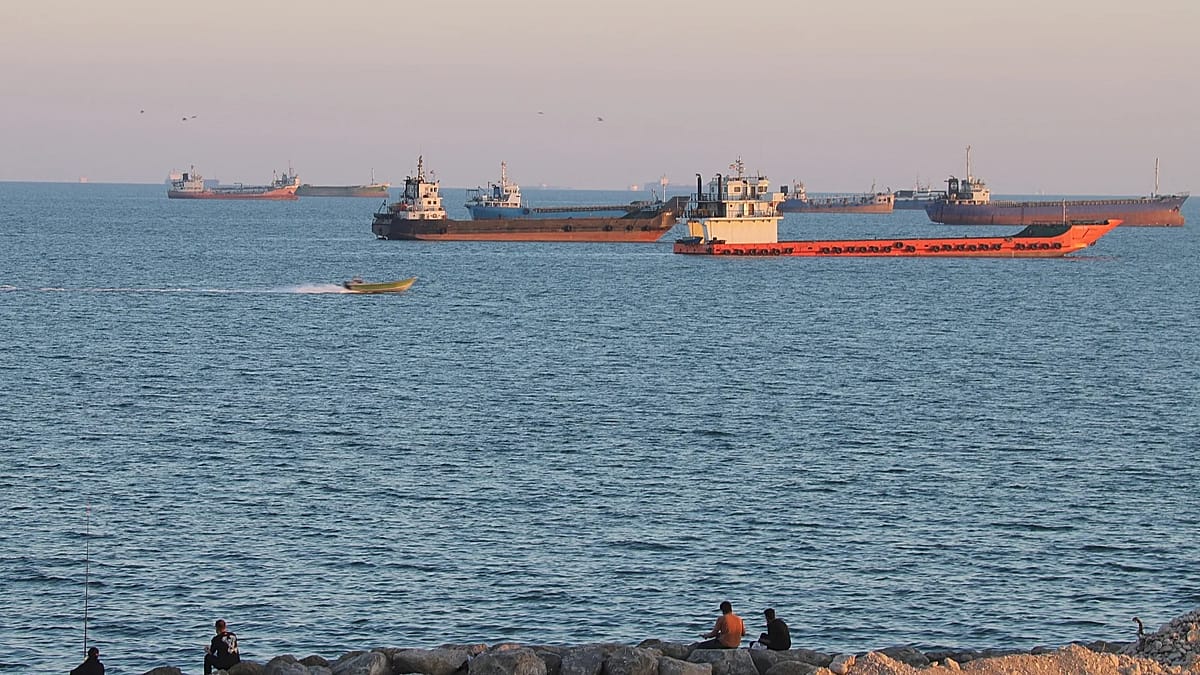
Yemen lies at the far south-west corner of the Arabian Peninsula. It has two coastlines: one on the Indian Ocean, where the once-prosperous trading port of Aden sits, and another on the Red Sea, next to the Bab al-Mandab Strait, known in English as the Gate of Tears. Whoever controls this narrow chokepoint can threaten shipping travelling between the Mediterranean, the Red Sea and the Indian Ocean. In normal times it handles around 12% of global trade, with 70 to 150 ships passing each day.
The Houthis say they pose no threat to shipping, but they are at war with Saudi Arabia, which makes it highly dangerous for Saudi oil tankers to sail past the rebel-held coast.
Will Aden fall?
Mohammed al-Basha, a Yemeni who founded the US-based risk advisory firm Basha Report, believes the Houthis would struggle to take the heavily fortified city of Aden. He says an assault on such a densely populated city would carry a high human cost, and that advancing across flat coastal plains would expose Houthi forces to air power. In his view, the Houthis currently seem to be seeking a negotiated surrender, hoping to exploit divisions among southern factions.
Another possibility is that the war settles into a less dramatic but unsatisfactory stalemate, with fewer casualties but the country split between Houthi-held areas and the scattered forces of the Saudi-backed Yemeni army.
Warnings about consequences
Col Iain Smailes, a former British defence attaché to Yemen, warned that the latest advance could push up oil prices, as happened when the Houthis seized the Bab al-Mandab Strait in September. He said stronger control of the western coast would help the Houthis smuggle in weapons and ammunition from Iran, the Horn of Africa and elsewhere, creating added threats to the region and letting Iran and the Houthis extend their influence in East Africa and beyond.