Houthi attacks in the Red Sea raise fears of wider Middle East conflict and more global economic damage
Yemen's Houthi fighters claim to have attacked shipping in the Red Sea, threatening a key trade route amid ongoing US-Iran strikes, raising concerns of regional destabilization and additional global economic harm.
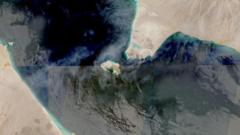
Yemen's Houthi group claims to have attacked ships in the Red Sea, forcing them to turn back from the narrow Bab El Mandeb strait. This threatens the main maritime route from Europe to Asia, already under strain from ongoing US-Iran strikes.
The US Central Command (Centcom) has conducted 12 consecutive nights of airstrikes on Iranian coastal radar, drone, and missile bases. Gulf Arab states, normally peaceful, now face constant attacks from Iran-backed groups, including the Houthis.
This week, two Saudi vessels were hit by missiles, and the Houthis claim to have turned back 10 others. This comes as Iran effectively closes the Strait of Hormuz, disrupting global energy and fertilizer supplies. Saudi Arabia had been partially bypassing this by using the East-West pipeline to send oil to the Red Sea, but now Houthi threats endanger that route.
US President Donald Trump has vowed to "take care of the Houthis," but previous attempts have failed. The Houthis, an Iran-backed Shia tribal group, took over Yemen's capital Sanaa in 2014 and now control most of the country, including the strategic port of Hodeidah.
From 2023 to 2025, the Houthis attacked what they said was Israeli-linked shipping in the Red Sea in support of Palestinians in Gaza, also targeting US and British warships. That campaign caused major shipping diversions and higher costs. There are fears it could happen again.
Regionally, Iraq and Syria have largely stabilized, and Gaza has a ceasefire, though air strikes continue. The greatest concern now is the Gulf and Arabian Peninsula. Trump is engaged in a war with Iran he seems unable to exit. Nightly US airstrikes fail to force Iran's Revolutionary Guard to give up control of the Strait of Hormuz. Economically, every day that oil, gas, and other products cannot pass through the straits puts pressure on global supply chains and prices.
A deal announced Wednesday paves the way for US firms to help Saudi Arabia develop a civil nuclear program, raising fears of a future arms race as Turkey and Egypt may step up their own nuclear activities. Without a lasting US-Iran deal, the region faces prolonged instability.


