Estonia plans wheelchair-accessible treetop trail in rare flying squirrel habitat
Estonia's State Forest Management Center (RMK) intends to build an elevated nature and study trail accessible to wheelchair users in Alutaguse National Park. Its final design will be decided in a design competition.
Estonia's State Forest Management Center (RMK) plans to build an elevated nature and study trail at canopy height in Alutaguse National Park, Ida-Viru County, in the country's northeast. The trail is to be wheelchair-accessible, allowing people with mobility difficulties to experience the forest from among the treetops.
The route will run between the Kauksi campsite and the visitor center. Instead of stairs, it will use gentle ramps and rest platforms. RMK Innovation Projects Manager Ulvar Kaubi said the trail is meant as a calm educational site for a broad audience rather than an adventure course. He said accessibility is the central principle and that RMK has already consulted the Estonian Chamber of Disabled People.
Location and layout
The trail's architectural design, height and length will be set in an upcoming design competition. Kauksi was selected after specialists from RMK, Enterprise Estonia (the country's business support agency) and the Environmental Board evaluated 17 candidate sites nationwide. The choice rested on proximity to existing trails, the visitor center and the Kauksi recreation and camping area, which is soon to be renovated.
The elevated walkway will supplement the existing footpath rather than span the whole coastal forest between the campsite and visitor center. Seating, observation points, information boards and interactive exhibits are planned along the way. Keeping visitors on a fixed path is intended to protect forest-floor vegetation from trampling.
RMK hopes the attraction will encourage longer stays in the Alutaguse area and support local accommodation, catering and guiding businesses.
Park expansion
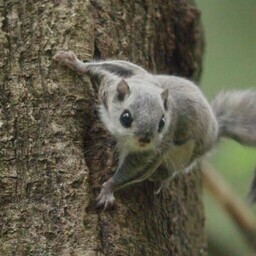
In September, the Estonian government approved enlarging Alutaguse National Park by 24,749 hectares, to 69,768 hectares, in order to link protected habitats more effectively. The park is Estonia's only habitat for the critically endangered Siberian flying squirrel, a nocturnal glider that relies on continuous old-growth canopy cover to move between nest trees.