Estonia launches Euroguard, its largest home-built warship since regaining independence
A shipyard at Nasva on Saaremaa island has launched Euroguard, a 45-metre experimental warship built by Estonia's Baltic Workboats. The €95 million project will test whether one vessel can hunt mines, monitor undersea infrastructure and sail autonomously.
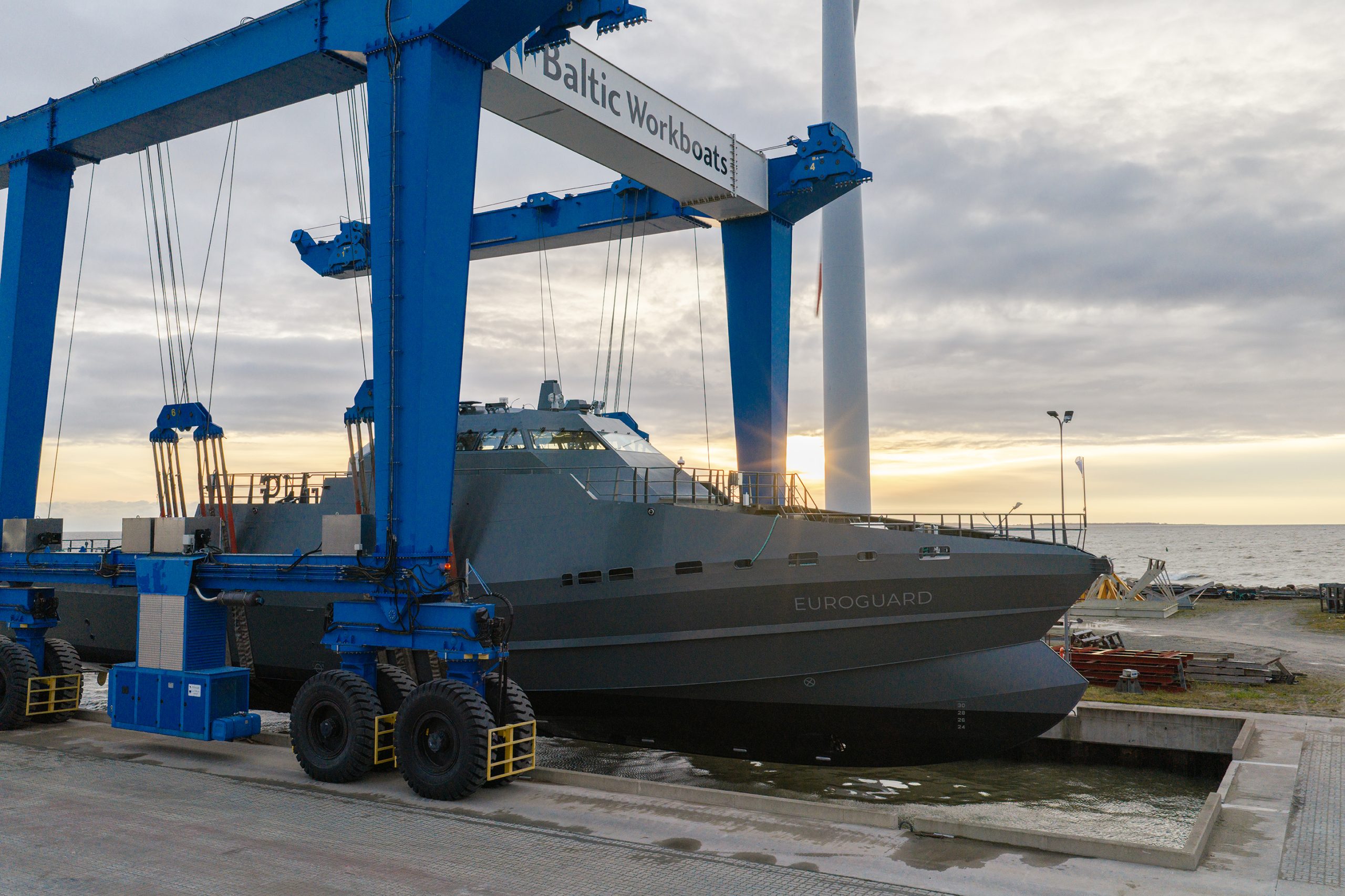
A shipyard at Nasva on the Estonian island of Saaremaa launched a 45-metre experimental warship called Euroguard on 18 November. It is the largest warship built in Estonia since the country regained independence in 1991. The vessel is meant to show whether a single ship can search for mines, watch over undersea infrastructure and navigate under its own control. Estonian president Ülle Madise christened it.
The project is worth €95 million. The European Defence Fund, the EU's instrument for defence research and development, provides €65 million, while the remaining €30 million comes from participating countries and companies. The consortium is led by Baltic Workboats, the Nasva yard that employs about 200 people and has built nearly 300 vessels for customers worldwide. Its partners include France's Naval Group and Thales, Italy's Leonardo, Spain's Navantia, Norway's Kongsberg and Dutch shipbuilder Damen, along with research bodies such as the Polish Naval Academy, the Netherlands' Delft University of Technology and Sweden's RISE. The Estonian Centre for Defence Investments coordinates the participating governments.
One hull, several jobs
The ship is 9.4 metres wide, draws no more than three metres of water and is designed to carry up to 100 metric tons of payload. Depending on the equipment fitted, it could hunt naval mines, monitor the seabed around critical infrastructure, or deploy and control unmanned craft. Search and rescue and environmental monitoring are also envisaged. Its hybrid propulsion is designed for at least 20 knots, with a planned range of at least 2,000 nautical miles.
Trials in 2027
Euroguard is a full-scale prototype that will serve as a floating test bed. In 2027, working with the Estonian Navy, engineers will take it into Estonian waters to see how technologies developed across ten European countries work together at sea. The trials will examine remote control by an operator ashore, as well as a mode in which the ship plans its own route, detects obstacles and avoids collisions.
The partners have also developed a common technical framework, GENSA, for integrating different manufacturers' equipment aboard a naval vessel. Project manager Jüri Saska said it is as valuable as the ship itself. If it works at sea, teams designing other European warships could reuse it. Baltic Workboats believes the experience positions it to design and build future warships for Estonia's own navy with its partners.