Estonian defense tech firms develop jam-resistant drones and new weapons
Estonian startups, responding to Russia's war in Ukraine, are developing interceptor drones, mini-rockets, mixed-reality goggles and decentralized communications networks. Some are already being tested in Ukraine.
Estonian defense companies, many of which test their products in Ukraine, are developing new technologies shaped by Russia's invasion of Ukraine, now in its fifth year. They include interceptor drones that work without GPS, mini-rockets, mixed-reality goggles and communications networks that keep running under jamming. The overview comes from "Pealtnägija," a current affairs program of Estonian public broadcaster ERR.
Last Friday, the Estonian government decided to close the road border crossings with Russia. This was a response to the mid-November attack on defense company Threod; in August, another Estonian defense firm, Milrem Robotics, was targeted in a sabotage attack. Much of the industry's work is classified.
An interceptor drone that does not need GPS
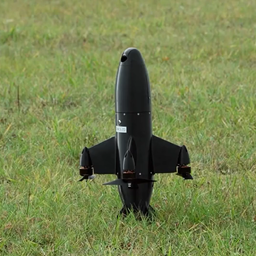
Lendurai, founded in 2024 by Siim Maivel, former head of data science at the mobility app Bolt, demonstrated its Accipiter interceptor drone. It flies to a target automatically using radar data, then locks on with thermal and visible-light imaging and destroys it. Its average speed is 400 km/h, compared with under 100 km/h for consumer quadcopters. It needs no GPS, instead locating itself by matching camera images to a satellite image loaded in advance. A human decides whether a target is destroyed. Maivel says a traditional air defense missile can cost millions, while the drone being shot down may cost about €100,000. Accipiter has not yet been used in combat, but its control and automated flight systems have been tested in Ukraine.
Goggles, a mini-rocket and communications
Vegvisir, co-founded by Ingvar Pärnamäe, former Deputy Secretary General of the Ministry of Defense, makes mixed-reality goggles and a helmet that let users see events kilometers away and view the surroundings of an armored vehicle in 360 degrees. The Estonian Defense Forces and the Australian Army use them.
Tempterno's CP 260 mini-rocket weighs under a kilogram, travels two kilometers at supersonic speed and costs about €2,000. It is still in development. CEO Tõnis Leisoo estimates that 500 tripod-mounted units would be enough to defend Estonia against a drone attack.
Wayren's communications platform keeps data moving when networks or Starlink fail, storing it on the device and sending it once a connection returns. The Estonian Defense Forces use it, and it has been tested in Ukraine for a year.
Overcrowding at official training grounds in Estonia remains a major obstacle slowing development.