Estonian railway operator wants to keep cross-border link with Russia
Eesti Raudtee, Estonia's railway company, says the rail connection with Russia should be maintained even though freight volumes have shrunk sharply since the war began. A possible closure of Estonia's eastern border would not affect rail traffic.
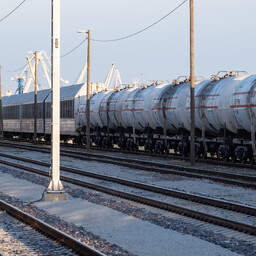
Estonian railway company Eesti Raudtee believes the rail connection with Russia should be preserved, even though the volume of cross-border freight has fallen sharply. According to ERR News, a possible closure of Estonia's eastern border would not affect rail traffic.
Before Russia's war in Ukraine, more than 10 million tons of goods were carried into Estonia by rail every year. This year the figure is around 200,000 tons. The drop is largely due to sanctions and Russia's inability or unwillingness to route transit cargo through Estonia.
Limited Russian capacity
Arthur Raichmann, commercial director of Eesti Raudtee, says much depends on the capacity of the Russian railway system, which has so far proved limited. In his words, most requests, for example to move grain wagons from Kazakhstan in transit through Estonian ports, have recently been refused transport permits, with capacity constraints cited.
The remaining freight consists mainly of food products and chemical goods not covered by sanctions, along with raw materials arriving in Sillamäe under so-called project-based shipments.
Why the link still matters
The company stresses that an open connection is important because ports, port terminals and a certain number of employees depend on it, as does industry in Estonia. Raichmann says the logistics chain now begins much farther away than Russia itself. Eesti Raudtee therefore remains cautiously optimistic that pragmatic Central Asian transit cargo through Estonian ports could continue, at least as an alternative route. It does not expect large volumes at present but supports keeping the option.
Raichmann does not believe closing road links with Russia would raise rail freight volumes. The main obstacles remain sanctions and restrictions imposed by Russian railways, and neither is going away.


