Estonian EU Affairs Committee backs changes to EU Chips Act 2.0
Estonia's parliamentary EU Affairs Committee has approved the government's position on a new EU regulation aimed at strengthening the bloc's semiconductor ecosystem and reducing strategic dependence on other regions. The measure could also affect Estonian electronics companies.
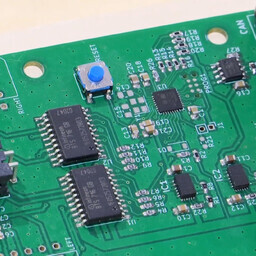
The European Union Affairs Committee of the Estonian parliament, acting on the opinion of the Economic Affairs Committee, has approved the government's proposed positions on a European Parliament and Council regulation aimed at strengthening the EU's semiconductor ecosystem. The initiative, known as "Chips Act 2.0," seeks to boost the resilience and competitiveness of the EU's chip industry while reducing strategic dependence.
Committee chairman Peeter Tali explained that the recent global chip shortage disrupted supply chains, caused shortages of devices ranging from cars to medical equipment, and in some cases even forced factory closures. He said the broader goal of the changes is to bring chip production back to Europe. Since Estonian companies have also shown interest in chip design, the changes are primarily intended to support local development and the patenting of intellectual property.
Focus on design and supply security
The draft regulation addresses design and manufacturing capacity, supply chain security, attracting investment, and developing science, innovation and skills. According to European Commission forecasts, the global semiconductor market will grow to 1.37 trillion euros by 2030, with 70% of that growth driven by AI-related components. The regulation's aim is to ensure Europe captures a larger share of this growth.
In Estonia, the initiative would primarily affect companies involved in chip design, testing and product development, as well as the broader electronics industry — mainly electronics manufacturing service providers, original equipment and design manufacturers, and engineering firms. Estonian companies could gain greater access to European design platforms, pilot production lines and competence centers, as well as opportunities to participate in initiatives supporting research, innovation and investment. Given the structure of Estonia's electronics industry, it is considered important that the measures also cover printed circuit boards, electronic device assembly, packaging and systems integration.


/nginx/o/2026/10/02/17951290t1hc23f.jpg)