Estonia's climate law stalls as Social Democrats and Reform Party clash over substance
Estonia's government-backed climate bill is stuck in parliament because the Social Democrats want binding targets and the Reform Party rejects them. Environmental scientist Tiit Maran argues the bill lacks substance.
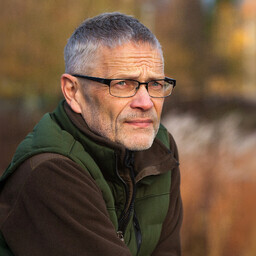
A bill on a Climate-Resilient Economy in Estonia's parliament, the Riigikogu, has reached an impasse. In an opinion piece published by public broadcaster ERR, environmental scientist Tiit Maran writes that the governing Reform Party and the opposition Social Democrats cannot agree on whether the law should contain binding targets. In the author's assessment, the bill currently has an impressive title but little substance.
How it got here
In 2024, a substantial draft was completed that, with revisions, could have become a working climate law. After a new coalition was formed without the Social Democrats, the draft was shelved. The government later submitted a hastily revised version to parliament. According to Maran, it was full of contradictions and had lost nearly all meaningful content, while half of the required emissions cuts were pushed into the 2040–2050 period.
In the Environment Committee, the Social Democratic representative abstained from the vote and did not propose ending consideration of the bill. The party submitted numerous amendments, but the Reform Party accepted only one: an independent oversight mechanism. It rejected putting sector-specific targets into the law, as well as a compromise that would have allowed those targets to be changed, arguing that flexibility is needed.
The author's conclusions
Maran argues that oversight is pointless without binding targets, and that the bill would create problems for future governments, which must meet international commitments. In his view, having no law would not make matters notably worse, since existing commitments and strategic documents would remain in force.
He proposes that Estonia instead consider a new sustainable development framework law covering climate, biodiversity, water, soils, forestry and food security. The article is the author's opinion, not a news report.