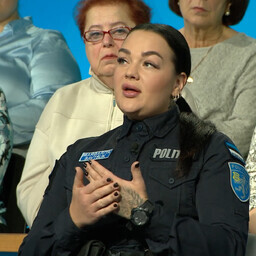
Estonia's social affairs minister does not rule out charging for ambulance calls, doctors push back
Estonian Social Affairs Minister Carmen Jõller has not ruled out that some ambulance calls could become partly paid in the future, but medical professionals are largely against the idea.

Amid an ongoing reform of Estonia's ambulance network that has raised many questions in society, Social Affairs Minister Carmen Jõller said in an interview published by Delfi on August 11 that she does not exclude the possibility that certain ambulance calls could become partly paid in the future. She stressed, however, that no such proposal has been presented to her yet and there are no immediate plans to introduce one.
Jõller acknowledged that the question of charging for certain ambulance calls has not been thoroughly studied so far. As a doctor herself, she said she has nothing against the idea and would not hesitate to support such a decision if it were based on expert assessment, analysis results, and backing from the medical community. She argued that charging would make people more responsible about when they call an ambulance, citing as an example a case where a young mother called emergency services because long fingernails prevented her from giving medicine to her infant.
Medics voice objections
Raul Adlas, chief physician of the Tallinn ambulance service, said this is so far only the minister's personal opinion rather than a proposal backed by analysis. He noted that Estonia has had no such charge for about 100 years and has no experience running such a system. Adlas said that if a person genuinely needs help, the right response is to advise them where to get it, not to fight with patients over fees.
Arkadi Popov, a board member of Tallinn Hospital, said Estonia's healthcare system is not currently ready to introduce a fixed charge for ambulance services. He argued that the priority should instead be strategic changes to the system — such as better screening of calls at the emergency dispatch center level — rather than punishing patients after the fact with a fee.
Adlas acknowledged that some patients need social rather than emergency medical assistance, citing people who have consumed excessive alcohol and need food or a place to sleep. However, he said it is very difficult for dispatchers to judge from a distance whether a call is medically justified, and Estonia's dispatch service is not trained to make that determination.