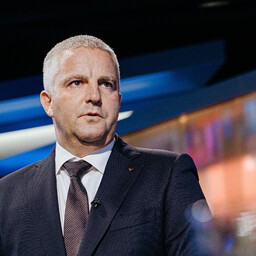
Estonia's state architect: How to manage changes with no single owner
Estonian state architect Tõnis Arjus shares insights on his role, emphasizing collaboration, reducing bureaucracy, and fostering quality spatial solutions to address complex challenges.

Estonian State Architect Tõnis Arjus, initially skeptical about the position, now sees its potential. He leads the Strategic Spatial Planning Service, which is responsible for reviewing plans, directing state land use, and conducting land assessments.
Arjus identified three main risks when taking the role: actual influence, workload, and bureaucracy growth. To counter these, he focused on building a strong team and collaborative methods. Instead of increasing bureaucracy, he aims to reduce it and always asks end-users whether a new service is truly needed before implementation.
In planning, the role has shifted from an "approver" to a partner and coordinator at early stages, while also introducing administrative oversight. In state land management, the preference is to establish building rights and pre-plan rather than simply sell. Architectural competitions are held in cooperation with local governments, such as for the Sindii center in Tori Parish.
Since this year, quality criteria have become legally mandatory. Quality space is based on Vitruvius' principles: durability, utility, and beauty. However, achieving it requires collaboration beyond architects, e.g., with the police to implement CPTED for safer environments. Quality criteria must be embedded in decision-making processes, and the state architect acts as a "spatial diplomat," bringing together diverse perspectives.
Smart engagement ensures that even if not everyone agrees, they understand why decisions are made. The wind energy example shows that constructive dialogue is possible between opposing sides if the process is well-prepared.
The core challenge is tackling complex problems without a single responsible party, such as urban sprawl or decline of small centers. The state architect creates networks and keeps these issues in public focus. The mission for coming years is to promote compact settlements to curb uncontrolled expansion and value existing infrastructure.
Arjus says he no longer questions the need for a state architect. The role combines legally defined tasks and "soft power" through cooperation networks to achieve long-term change.