Indian activist says youth protests have 'terribly' weakened Modi
Leading Indian activist Sonam Wangchuk says recent youth-led protests have 'terribly' weakened Prime Minister Narendra Modi’s government. After his 26-day hunger strike, he says young people now feel empowered to push for change.
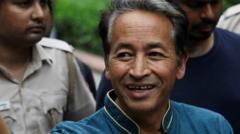
A prominent Indian activist and education reformer has said mass demonstrations led by young people have seriously undermined Prime Minister Narendra Modi’s administration. Sonam Wangchuk, who staged a lengthy hunger strike in Delhi earlier this summer, told the BBC that Modi has been weakened “terribly” by the protests.
The movement, called the “cockroach” movement, grew out of anger over leaked exam papers. The name comes from a remark by India's chief justice, who compared unemployed young people to cockroaches during a court hearing. It became one of the biggest displays of public dissent against the government since it took office in 2014.
Wangchuk, 59, fasted for 26 days in June and July, consuming only salt and water. He lost 11 kilograms and has regained six. For the final six days, he says he was forcibly taken to hospitals that felt “more like prisons”.
The protests led to the resignation of Education Minister Dharmendra Pradhan on 25 July, a day after Wangchuk ended his fast. Since then, Modi has announced fast-track courts for exam leak cases and appointed a tech billionaire to lead education reforms. The government also promised compensation to families of students who died by suicide after leaks.
However, Wangchuk argues deeper problems remain. Graduate unemployment in India has hovered around 35–40% for 25 years. He says current exams, often multiple-choice, do not measure useful skills and are designed only to process millions of students. If exams valued hands-on ability, schools might change their teaching and help address the jobs crisis. He calls for long-term planning about what India will look like 15 years from now.
The government has dismissed criticism of its economic record, saying unemployment claims are overstated. But Wangchuk says the delay in Pradhan's resignation damaged the ruling BJP, which lost two of three recent by-elections, including a long-held Bihar seat. He believes leaders can still change, adding he would “give them that chance”.
Wangchuk, now home in Leh, says he has renewed faith in hunger strikes, drawing on Gandhi's non-violent philosophy. He has used the tactic before for Ladakh self-rule and against development in environmentally sensitive areas. While those goals remain unmet, he says self-inflicted pain makes the government respond differently than violence would. He has no plans to run for office, preferring to enable others.