Iran warns ships against seeking alternative routes in Hormuz Strait
Iran's foreign minister warned that any attempts to bypass Iran's designated route in the Hormuz Strait will increase tensions, as US and Iranian forces continue to exchange attacks, threatening a recent ceasefire agreement.
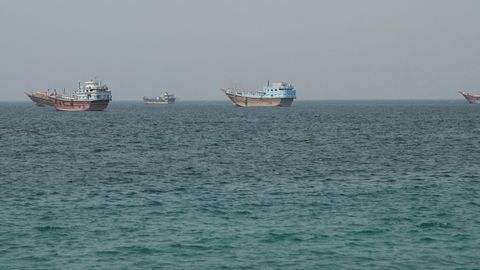
Iranian Foreign Minister Abbas Araghchi stated on Sunday that ships trying to use alternative routes to avoid Iran's designated corridor in the Hormuz Strait will only worsen the situation and delay the reopening of the strait. He called on all parties to adhere to the Memorandum of Understanding.
Iran's Revolutionary Guards announced on Sunday that they have tightened control over traffic in the strait and promised stricter punishment for violators. Meanwhile, Mohammad Mokhber, an adviser to Iran's Supreme Leader, wrote on social media that Iran's control over the strait will prevent the US from realizing its hegemonic ambitions in the region.
The Memorandum of Understanding reached this month stipulated that commercial vessels could transit the strait free of charge for 60 days, but by late June doubts are growing about compliance. US and Iranian forces again exchanged strikes: the US Central Command attacked ten Iranian military targets in response to Iranian aggression against commercial shipping. Iran retaliated with strikes on US bases in Kuwait and Bahrain, which both countries condemned.
US President Donald Trump said on Saturday that if war resumes, Iran "will no longer exist." The conflict began in February with a US-Israeli offensive that disrupted shipping through the Hormuz Strait, through which about a fifth of the world's oil and liquefied gas was transported before the war. Although a ceasefire took effect in April, sporadic violence continues in the region.
/nginx/o/2026/09/21/17929740t1h77d2.jpg)