Iran denies role in Kuwait drone strike that killed two Italians
Iranian Foreign Minister Abbas Araghchi rejected accusations over a drone attack on Kuwait that killed two Italian nationals and proposed a joint investigation with Rome and Kuwait City. Gulf states condemned the attack.
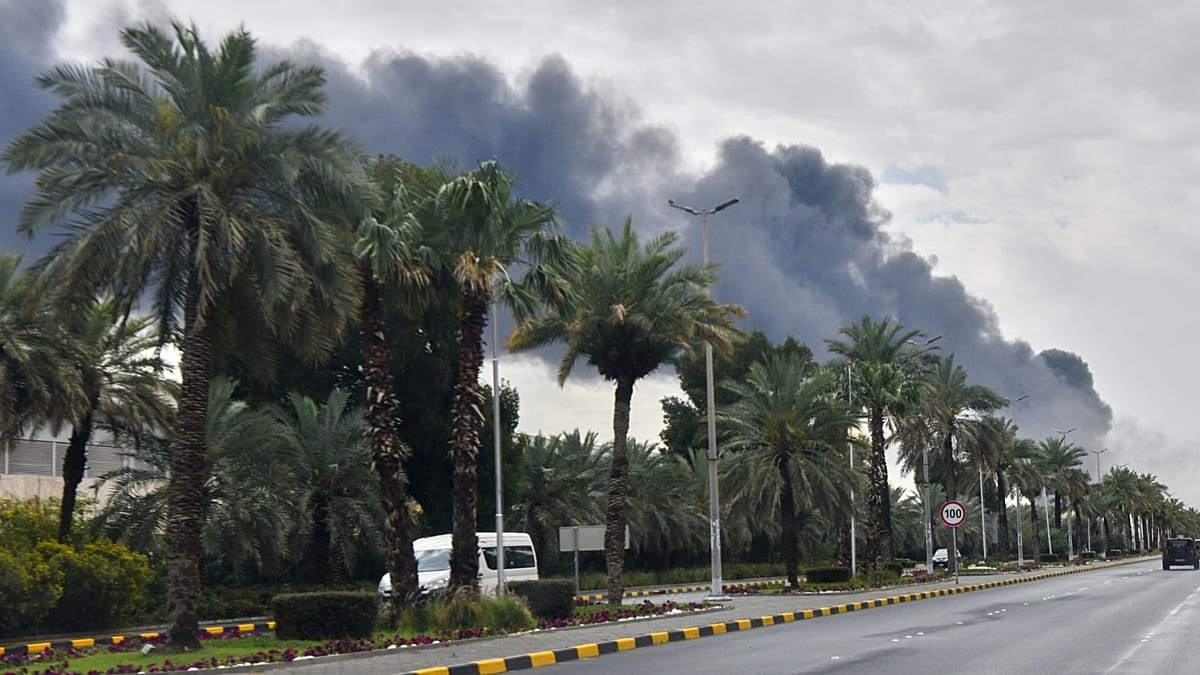
Iran on Thursday denied responsibility for drone strikes on Kuwait that killed two Italian nationals. Foreign Minister Abbas Araghchi called the accusations baseless and proposed a joint investigation with Italy and Kuwait. The incident comes amid a war in which Iran has repeatedly struck Arab Gulf states.
Araghchi spoke by phone with his Kuwaiti counterpart, Sheikh Jarrah Jaber Al-Ahmad Al-Sabah, and Italy's Foreign Minister Antonio Tajani. He later wrote on X that the incident was suspicious and looked like a pre-cooked recipe for war, adding that Tehran was ready to cooperate to determine its cause.
Tajani told the Italian Senate that several Iranian drones hit Kuwaiti military facilities at around 2 pm local time (12 pm CET), including an air defence radar centre. Two Italian specialists employed by arms company Rheinmetall were working there. Kuwait's foreign minister condemned what he called a heinous Iranian aggression and offered condolences to Italy.
Abolfazl Shekarchi, a senior spokesperson for Iran's armed forces, denied any Iranian military operation in the region and accused the US and Israel of staging a false flag attack. The Fars news agency, which is affiliated with the Islamic Revolutionary Guard Corps, cited an unnamed security source alleging that Ukraine had deployed a network of thousands of drones across the region, including in the Kurdistan Region of Iraq. It offered no evidence. Iran's embassy in Rome also categorically rejected any Iranian role.
International reaction
Saudi Arabia demanded an immediate halt to Iranian attacks and held Tehran responsible for the consequences. Bahrain asked the UN Security Council to hold Iran accountable and demanded compensation. Qatar warned that repeated strikes on Kuwait risked undermining diplomatic efforts to ease regional tensions. The UAE, Syria and Jordan also condemned the attack. European Commission President Ursula von der Leyen called for greater pressure on Tehran, saying Gulf security is directly linked to Europe's security.
Tajani informed the Italian parliament on 8 October of a decision to relocate most Italian troops from Kuwait; about 10 military personnel remained at the time of the attack. Iran's army has also confirmed a separate drone attack on Kuwait's Ali Al Salem base earlier in November.