Iran attacks US bases in Bahrain as its tankers prepare to break the US blockade
Iran launched two waves of drone and ballistic missile attacks on US bases in Bahrain, home of the US Fifth Fleet headquarters, on Saturday evening. At least three tankers were also attacked near the Strait of Hormuz as Iranian tankers prepare to challenge the US blockade.
Iran launched two waves of drone and ballistic missile attacks on four US military bases in Bahrain on the evening of 21 November. The Gulf state hosts the headquarters of the US Fifth Fleet. Both Bahrain's government and Iranian media confirmed the strikes, which deepen a crisis in which the United States has blockaded Iranian ports and Iran has threatened to break that blockade.
Iran's semi-official Fars news agency said four bases were targeted and named two of them, Sheikh Isa and Juffair. Bahrain said its air defences intercepted several attacks. Local sources reported loud explosions, and Bahrain's Interior Ministry said a fire broke out at a civilian industrial compound, with no injuries. Shortly afterwards, explosions were reported in Sirik, in southern Iran. The US military has regularly retaliated against Iranian military facilities in recent weeks. Earlier on Saturday, US Central Command (CENTCOM) denied Iranian claims that a surface-to-air missile had damaged a US F-16 fighter jet on Friday evening.
Tankers attacked near the Strait of Hormuz
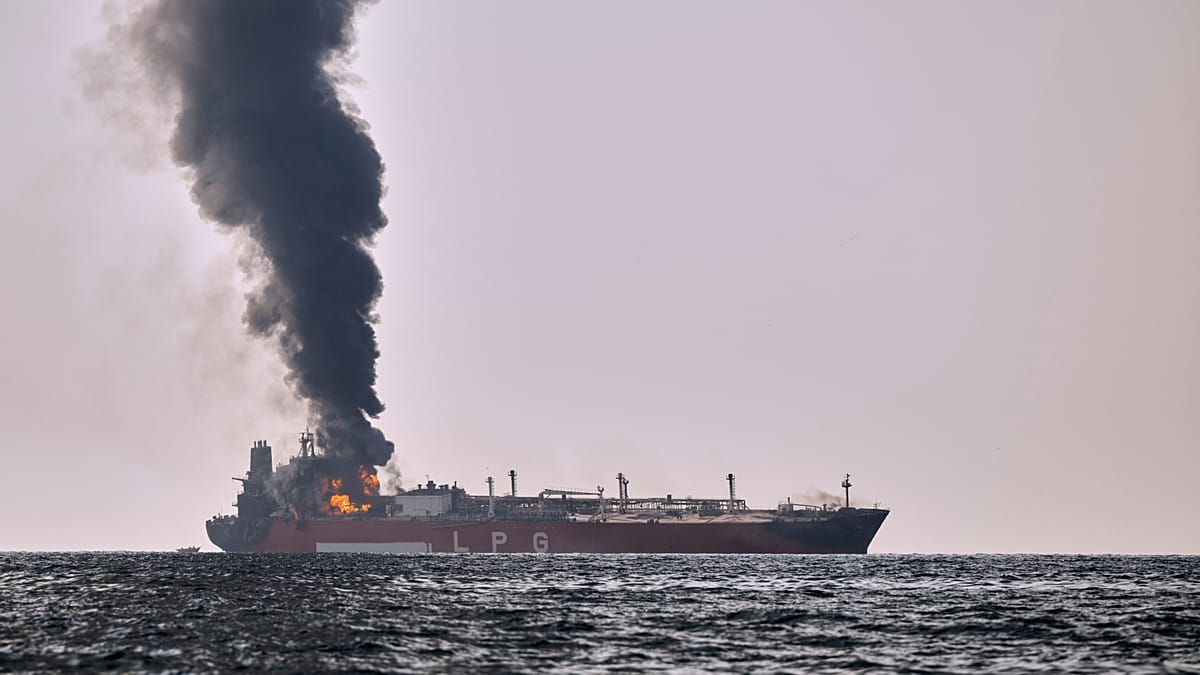
At least three oil tankers were attacked in or near the Strait of Hormuz on Saturday, apparently the latest Iranian strikes on shipping in the strategic waterway. The UK military's maritime security centre, UKMTO, said two tankers were struck separately by projectiles as they left the Persian Gulf. The Iranian navy said a tanker hit a naval mine east of the strait and caught fire. No casualties were reported. State media said overnight operations in the strait were the most "intense and varied" so far.
Blockade and diplomacy
More than 14 Iranian tankers are reportedly prepared off Kharg Island to break out of the blockade in the coming days. Deputy Foreign Minister Kazem Gharibabadi called the blockade a hostile act and pledged necessary measures to break the economic siege. President Masoud Pezeshkian said Iran faces a "silent economic war" that is "tougher than a war with missiles." Army spokesman Brigadier General Mohammad Akraminia warned of a "decisive and immediate response" to any attack.
The Washington-based Institute for the Study of War said that attempts to run the blockade leave the US choosing between letting it collapse and returning to a war that would strain ties with Gulf allies. Qatar-led negotiations between the US and Iran continue; a Qatari delegation held about two hours of talks with Iranian officials on Friday. US President Donald Trump told Fox News he intends to reach a "permanent" deal preventing Iran from obtaining nuclear weapons and that he was never interested in regime change.


