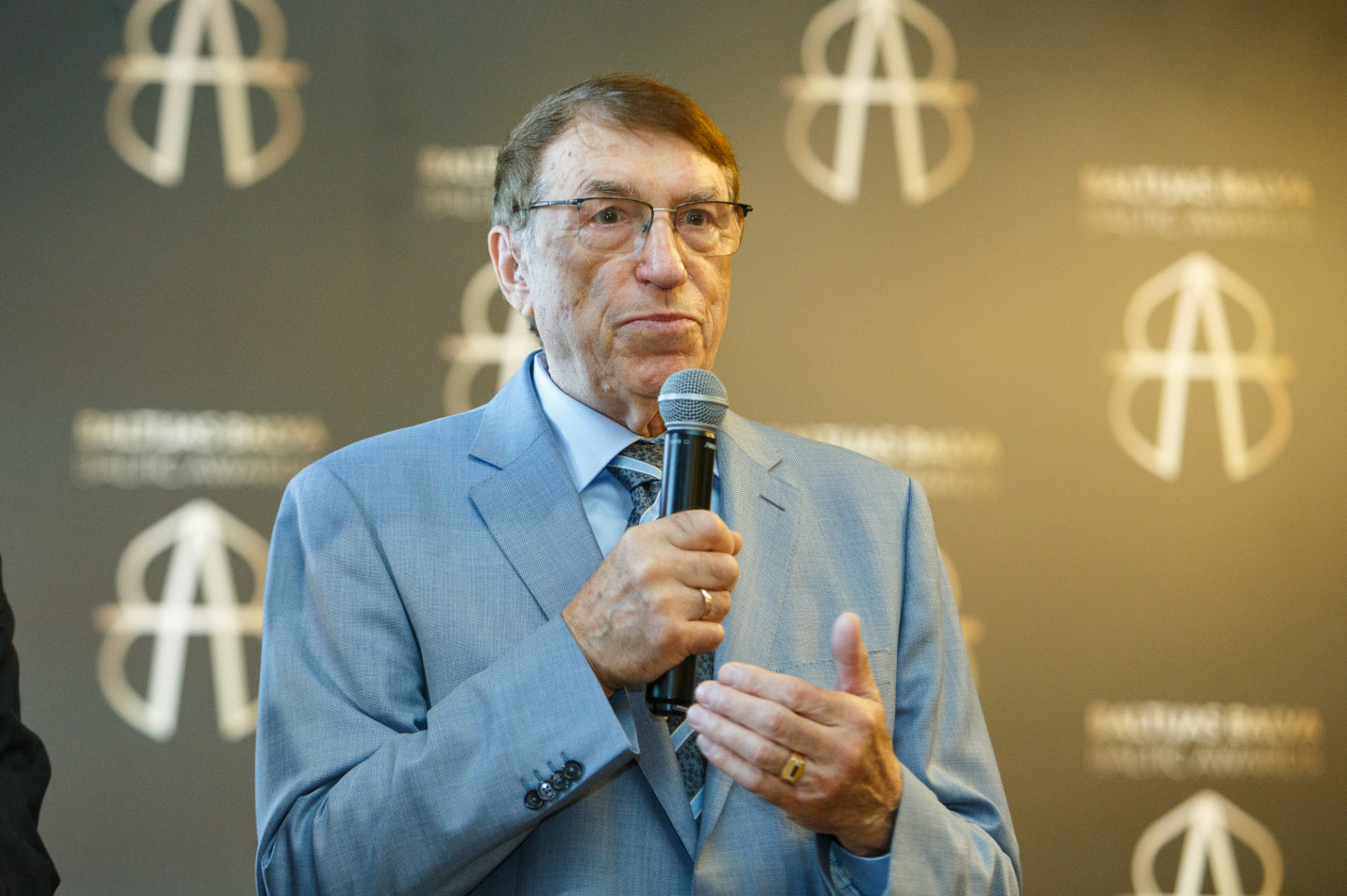
Ivars Kalviņš keeps post as head of Latvian Academy of Sciences
At a closed-ballot meeting of the Latvian Academy of Sciences, president Ivars Kalviņš was not removed, as the required two-thirds majority was not reached. The vote followed a dispute over his recommendation of Latvian citizenship for an Indian national.

Ivars Kalviņš, president of the Latvian Academy of Sciences (LZA), was not removed from office at the academy's autumn general assembly on Thursday, because the secret ballot fell short of the required two-thirds majority. The vote was linked to a dispute over Kalviņš's recommendation that Latvian citizenship be granted to Indian national Divya Vishwanath.
A total of 110 assembly participants voted for his removal and 61 against, while 11 ballots were declared invalid. Kalviņš has been president since 2020, and in late 2024 he was elected to a second four-year term that runs until 2028. LZA's statutes set officials' terms at four years and allow election to the same post no more than twice in a row.
How the dispute arose
At the end of October, Kalviņš published an open letter to the public and media saying he was considering leaving the post. He later asked the LZA Senate to remove him from the presidency.
On 15 October, the Saeima, Latvia's parliament, passed a law granting citizenship to Vishwanath, but on 22 October it adopted another law reversing that decision, after doubts surfaced publicly about her education, scientific publications and the grounds for granting citizenship. The LZA Presidium earlier stated that the president had acted within his powers and that the recommendation letter was prepared in good faith, based on information provided to Kalviņš.
The Prosecutor General's Office has opened a review of the process by which Vishwanath obtained citizenship. Prosecutors will also assess the LZA's actual role and systematic involvement in citizenship cases, including factors that affected the granting of citizenship to her husband, Kanan Vishwanath.
Review of the academy's status
The Ministry of Education and Science has circulated for approval a draft order to set up an inter-institutional commission. It would assess the LZA's legal status, functions and role in the national science system. The commission is to include representatives of the ministry, the Ministry of Finance, the State Chancellery, LZA, the Latvian Council of Science, universities and research institutions, and the Latvian Young Scientists' Association.
The commission must prepare proposals for the academy's future development and possible improvements to its legal framework and operating model. Its report is due to the government by 31 May 2027. The ministry points to the lack of a comprehensive assessment of the academy's operating model, including its state budget funding and cooperation with research institutions.