Israeli election leaves no bloc with a majority as coalition talks begin
With 91% of votes counted in Israel's parliamentary election, neither Prime Minister Benjamin Netanyahu's bloc nor opposition leader Gadi Eisenkot's alliance has reached the 61 seats needed for a majority. Weeks of uncertainty over forming a government are expected.
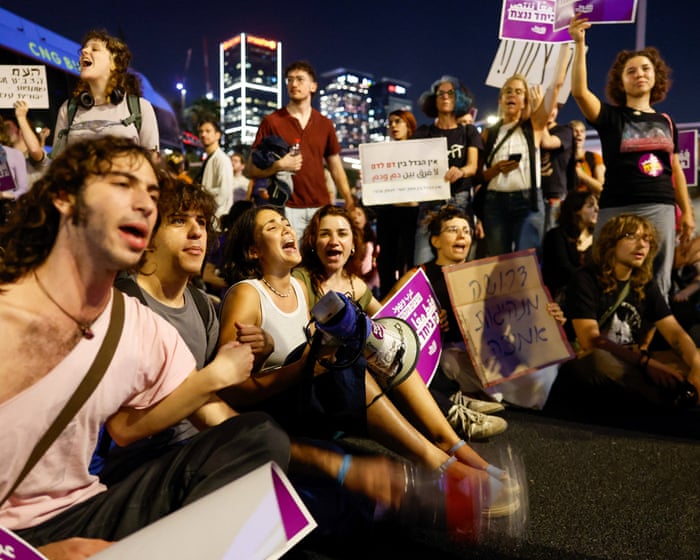
Israel faces a prolonged period of uncertainty after Tuesday's Knesset (parliament) election produced no bloc with a governing majority. With 91% of votes counted, Prime Minister Benjamin Netanyahu's bloc is projected to win 53 seats, the alliance of opposition leader and former general Gadi Eisenkot 48, and Palestinian-led parties a record 19. A majority in the 120-seat Knesset requires 61.
An unclear result
The remaining ballots are absentee votes cast by soldiers, diplomats, prisoners, hospital patients and others who vote outside their assigned stations. They are checked at the Knesset before being counted. The elections committee began counting them at 1am local time, and the process will run until Thursday evening. About 500,000 ballots are expected, and they are not forecast to change the picture significantly. Final results are due on Thursday.
Talks and positions
Yair Golan, leader of the centre-left Democrats and a junior partner in Eisenkot's bloc, said he will meet Eisenkot and Yair Lapid, the number two in the opposition B'Yachad party, on Thursday. That would mark the official start of coalition talks. Golan is so far the only opposition leader who backs cooperating with parties led by Palestinian citizens of Israel, who make up about 20% of the population.
Other opposition figures ruled out such cooperation during the campaign. Eisenkot has not explicitly excluded it but set conditions that make it politically unworkable for those parties to join. Yousef Jabareen, head of the Arab-majority Joint List, said he is willing to help unseat Netanyahu but would not join a coalition outright. Such ad hoc support could let Eisenkot run a minority government, though observers doubt it would last.
President Isaac Herzog, who decides whom to ask to form a government, said he hopes to avoid another election. Netanyahu's Likud party accused Arab parties of "stealing" the election, offering no evidence; the Central Elections Committee will examine the complaint in its routine post-election review.
Reaction
On Wednesday the shekel fell more than 2% and Tel Aviv's main stock index dropped 2.5%. UN human rights chief Volker Turk said he hopes the next Israeli government will change course and respect international law.