Nearly 1,800 volunteers haul 360-tonne Japanese castle tower with ropes
In Aomori prefecture, thousands of volunteers used ropes to inch the historic wooden keep of Hirosaki Castle toward its original spot as part of earthquake repair work. The tower is expected to fully reopen to visitors only in 2033.
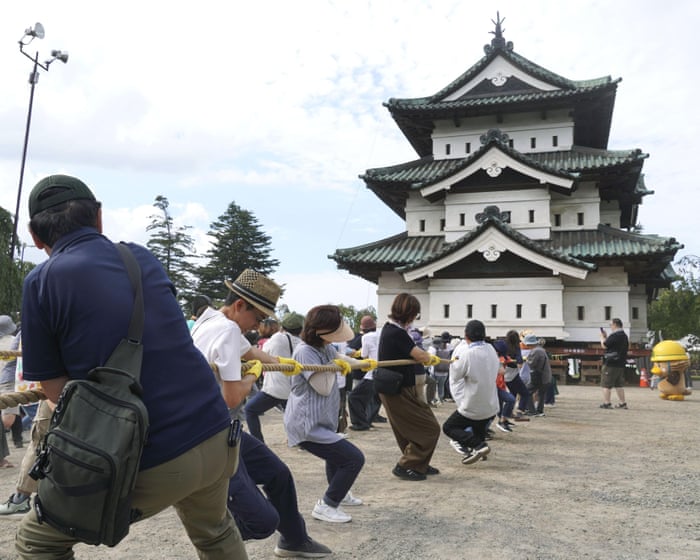
In northern Japan's Aomori prefecture this past weekend, around 1,800 people gathered to help move the 360-tonne keep of Hirosaki Castle using 30-metre ropes, working in rotating teams as they chanted together. The structure, mounted on rails, was pulled 1.13 metres on Saturday and a further 1.09 metres on Sunday, edging it closer to its original position.
The relocation is necessary to finish repairing a castle wall damaged by a major earthquake. To preserve the historic keep, organizers used hikiya, a centuries-old Japanese technique in which buildings are placed on rollers and moved intact rather than dismantled. Because the tower is a nationally designated important cultural property, taking it apart was not an option.
Kensuke Hayasaka, head of Hirosaki City's parks and green spaces division, said around 8,000 people applied for the 1,800 available spots, with participants coming not only from across Japan but also from Southeast Asia, Europe and North America. A similar public pull took place in 2015, marking the first citizen-driven hikiya effort and the first time in a century the method had been used to move a castle.
Repairs to the wall, which involved restacking all 2,185 original stones, were completed in December 2024. The hand-pulling phase will continue until the end of August, moving the keep a total of 5 metres of the roughly 73 metres it needs to travel; machinery will complete the remaining distance by the end of the year.
The Hirosaki keep is one of just 12 such original castle towers remaining in Japan and the only one in the Tohoku region. The castle was completed in 1611, though its original keep burned down in 1627 after lightning struck a gunpowder store; the current structure dates to 1810. The site normally draws about 2 million visitors annually during cherry blossom season, but extensive preservation work means the keep will remain closed to tourists, with reopening expected in 2033.