Japanese Journalist Yuki Imai Arrested in Russia on Espionage Charges
Russia's Federal Security Service (FSB) arrested Yuki Imai, a journalist for Japan's Hokkaido Shimbun, on Sakhalin island on espionage charges. Japan is handling the case in secrecy, and an expert suggests Moscow may be using it to pressure Tokyo.
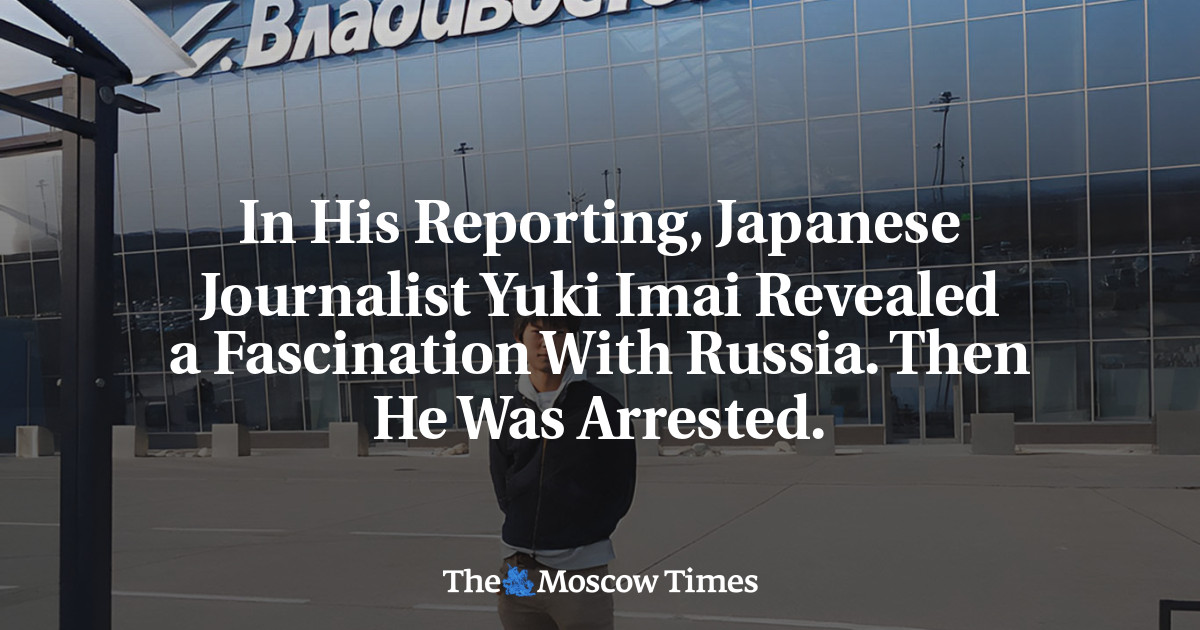
Two weeks ago, masked agents of Russia's Federal Security Service (FSB) broke into a hotel room in Yuzhno-Sakhalinsk, the largest city on Sakhalin island in the Russian Far East, and arrested 34-year-old Japanese journalist Yuki Imai. He works for Hokkaido Shimbun, a daily newspaper from Japan's northern island of Hokkaido, and faces espionage charges that are likely linked to his reporting. Imai is now held in Moscow's Lefortovo Prison awaiting trial and faces up to 20 years in prison.
An interest in Russia
An acquaintance told the exiled outlet IStories that Imai first went to Russia in 2014 to study the Russian language at St. Petersburg State University. He later became a reporter for Hokkaido Shimbun, which, because of its proximity to Russia and the disputed Kuril Islands, runs a substantial section on Russian affairs. Imai wrote about the legacy of the territorial dispute, Japan's absence from islands that once belonged to it, Russia's parliamentary elections, relations with North Korea and growing military drone production on Sakhalin. His last dispatch described North Korean laborers in the Far East. His grandfather lived in the Sakhalin town of Kholmsk, then called Maoka, before World War II.
Secrecy in Japan
Unlike the 2023 case of Wall Street Journal reporter Evan Gershkovich, there has been no public campaign by colleagues or family. Aleksandra Bielakowska of Reporters Without Borders' Asia-Pacific Bureau said that in Japan the government usually takes the lead and rarely lets others get involved. Imai's name was made public by the Russian side. Japan's Foreign Affairs Ministry has called on Russia to release the journalist and treat him in a humane, fair and impartial manner. On Tuesday, Hokkaido Shimbun said Japanese embassy officials had finally met Imai after nearly two weeks without contact.
Possible motives
James D.J. Brown, a professor of international relations at Temple University, Japan Campus, argues that the quiet approach could raise the risk for other journalists. He allows that Imai could become part of a multinational prisoner swap, but thinks Russia is more likely seeking to pressure Japan over its hosting of American Typhon intermediate-range missiles and its help in paying for weapons for Ukraine.