New school in Estonia has better air, but much higher energy bills
A newly built high school in Lääneranna Municipality in western Estonia offers a better indoor environment but costs much more for electricity and heating. Experts say the main cause may be its modern ventilation system.
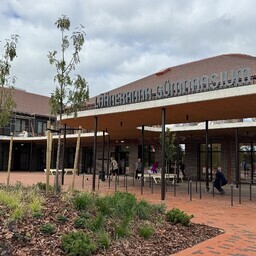
Lääneranna Municipality in western Estonia replaced the old building of Lääneranna High School with a new one, and the new school's electricity and heating bills have turned out to be considerably higher than those of its predecessor. The case shows that better indoor air quality can come with higher energy use.
Mayor Tarvi Sits said part of the rise is due to higher energy prices, but the main reason is probably the modern ventilation system, which uses far more electricity. The old, depreciated building had no such system at all. He stressed that this is only a preliminary assessment.
An energy audit had already been planned, but it is now being accelerated so that specialists can examine all the systems and determine whether these costs are the new normal or can be cut with better adjustments. With winter ahead, the municipality has set aside extra funds for the school's heating and electricity.
Better indoor climate can mean higher consumption
Priit Valk, facility services director at Riigi Kinnisvara AS, Estonia's state real estate company, said a new building can sometimes use more energy than an older one. The same can happen after renovating an old building that previously lacked mechanical ventilation: consumption rises, but working conditions improve significantly. Each building must be assessed individually.
Jarek Kurnitski, professor at Tallinn University of Technology who leads its nearly zero-energy buildings research group, explained that in a school many students share relatively small classrooms, so the air must be exchanged five times per hour. Ventilation cannot simply be switched off, because it affects learning outcomes. If rooms are not used intensively all day, demand-based ventilation could cut electricity use by about half. He added that newly completed buildings sometimes run inefficiently in their first months because systems have not yet been fully tuned.
Kurnitski stressed that new buildings are generally far more energy-efficient: older ones often use two to three times more energy, and a new building should save at least half of energy costs.