June Research Roundup: 6 Cool Science Stories We Almost Missed
Scientists uncovered new insights into soccer feint physics, ball aerodynamics, Herculaneum scroll reading, a boron buckyball, ballista spider hunting tactics, and the shape of feces.
The Science of Soccer's Scissors Feint
Japanese researchers studied the scissors feint using high-speed cameras. They found that skilled players actively regulate distance to defenders, coordinate knee flexion, and keep foot lift minimal to create quick, deceptive moves.
FIFA Ball Aerodynamics
The Adidas Trionda ball, with deep seams, experiences a drag crisis at certain speeds, making it faster and surprising goalkeepers. The study was published in Fluids.
Reading a Complete Herculaneum Scroll
As part of the Vesuvius Challenge, scroll PHerc. 1667 was fully deciphered—a philosophical treatise on ethics. The final column revealed the name Aristocreon, dating it to the 2nd century BCE. Higher-resolution imaging also revealed ink on other scrolls.
A Boron Buckyball
Brown University scientists produced the first experimental evidence of a boron buckyball (80 boron atoms). Despite theoretical predictions of instability, the structure appears highly symmetric. The results were published in Chemical Science.
Ballista Spiders
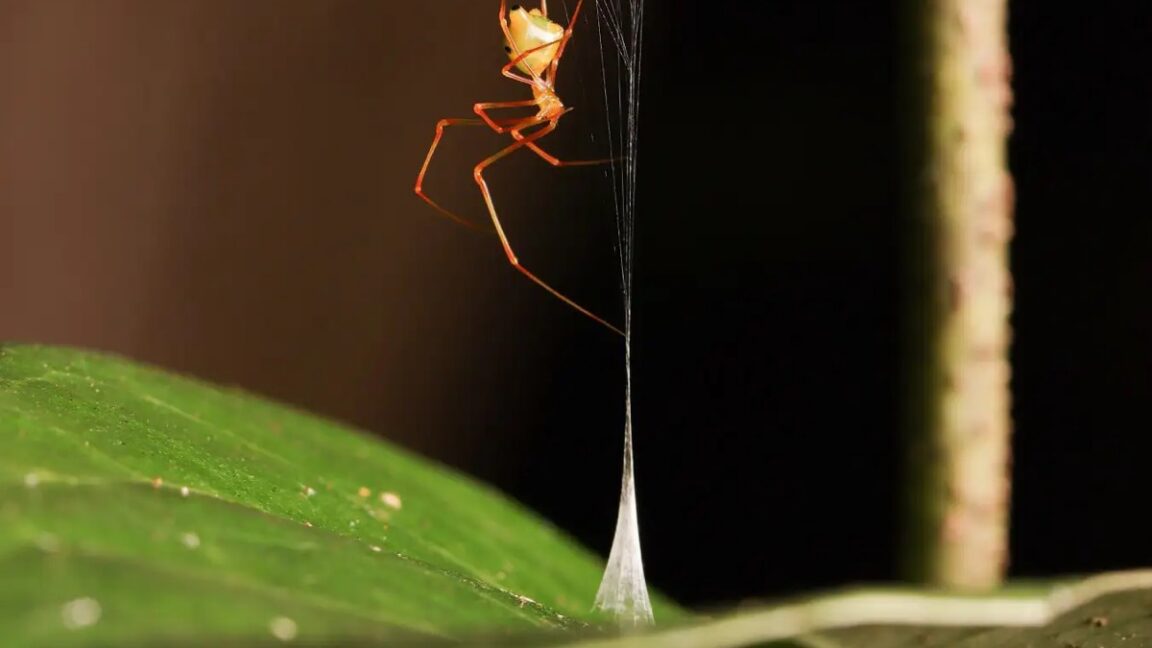
A new spider species in Australia builds conical traps for green ants. The trap launches the ant upward with accelerations up to 1,367 m/s². The spiders use a chemical lure to attract prey.
The Shape of Poo
Lugworms produce uniform spiral feces by defecating upward, while human feces taper due to downward extrusion. The study in Nature Communications suggests a second poop emoji may be proposed.