How Deutsche Welle verifies claims and fights disinformation
German broadcaster Deutsche Welle has detailed its fact-checking methodology, covering topic selection, sourcing standards and its use of artificial intelligence. DW has been a member of the International Fact-Checking Network since March 2024.
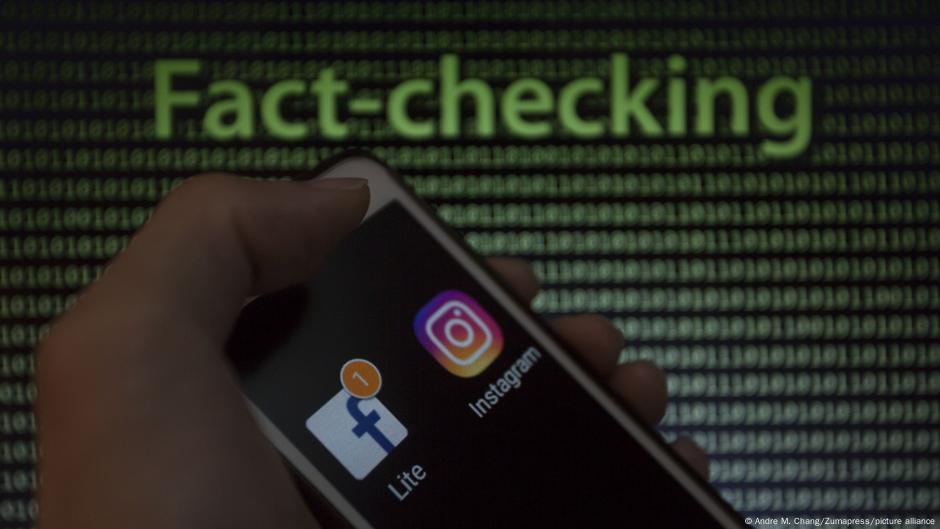
German public broadcaster Deutsche Welle (DW) has outlined how its fact-checking team works to separate accurate information from false and misleading claims that can spread rapidly online. The team reviews statements from politicians, officials and political parties, as well as claims involving celebrities, athletes and business leaders, and verifies viral images, videos and audio recordings, including content suspected of being generated or altered using artificial intelligence.
Choosing what to investigate
DW selects topics based on four criteria: how quickly a narrative is spreading, how widely and in how many languages it appears, its relevance to the audience, and the potential consequences of its spread.
Verification methods
Reporters trace claims to their origin, check when and where they emerged, assess possible manipulation, and compare them against reliable data and expert assessments. The team uses open-source intelligence (OSINT) tools and, whenever possible, follows a two-source principle. Sources are named and given a specific occupation, with anonymity granted only in rare cases where safety is at risk.
Claims are rated using an eight-category system, including "true," "false," "misleading" and "unproven," alongside separate categories for authentic, fake, AI-generated or AI-manipulated visual and audio content. Before publication, a lead reporter proposes a verdict that is reviewed by two editors.
AI use and correcting errors
DW says artificial intelligence can support workflows, accessibility and translation, but human journalists remain responsible for every published item. Any content verified as AI-generated or AI-manipulated is clearly labeled, and the use of AI detection tools during verification is disclosed. When errors are identified, DW corrects them transparently and adds a note explaining the change. DW has been a member of the International Fact-Checking Network since March 2024 and also takes part in the ARD Fact-Check Network among Germany's public broadcasters.