How China's currency worsens the EU's trade deficit – and what Brussels can do
The EU faces a record trade deficit with China, exacerbated by the undervaluation of the yuan. EU leaders are considering dialogue and monitoring export prices to address the issue.
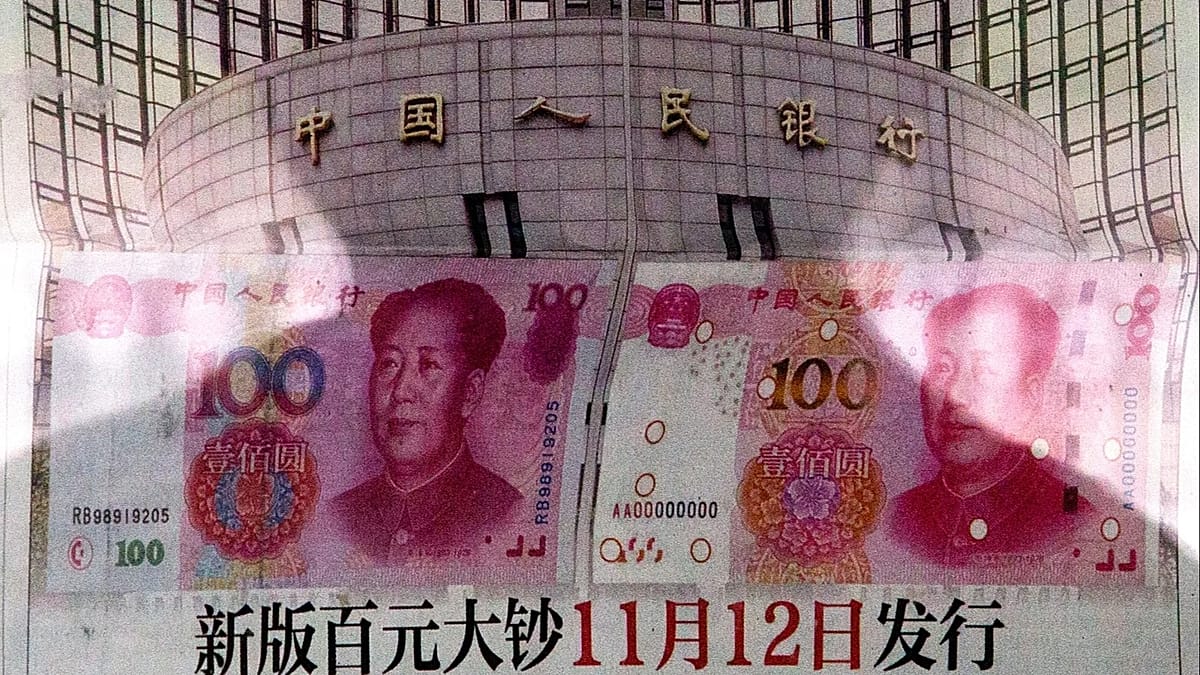
The European Union's trade deficit with China hit a record €359.9 billion in 2025, with all EU member states posting a deficit for the first time, including Germany. German Chancellor Friedrich Merz, speaking after the European Council summit on 19 June, argued that an artificially low currency gives an advantage to countries seeking to improve their competitive position. The issue of China's currency management was also high on the agenda at last week's G7 summit in France.
According to a report by France's Haut Commissariat à la Stratégie au Plan, the yuan is estimated to be undervalued by around 20-25 percent. Although there is no universally recognized method to determine currency misalignment, the report notes that the assessment of significant undervaluation is widely shared, including among international institutions. Alicia Ferro Herrera, an expert at the Brussels-based think tank Bruegel, told Euronews that China prevents its currency from appreciating faster by not repatriating all export revenues to the mainland – they stay in Hong Kong and are not converted into renminbi.
Ferro Herrera also highlighted the role of inflation differentials: since Russia's invasion of Ukraine, the accumulation of inflation in Europe explains about three-quarters of the loss in external competitiveness, she estimated. EU industry assesses Chinese products as 30-40 percent cheaper than European equivalents, partly due to the yuan's undervaluation.
What can the EU do? Merz suggested initiating dialogue with China on currency issues, citing the 1985 Plaza Agreement, where the US, Japan, West Germany, the UK, and France agreed to depreciate the dollar against the yen and the Deutsche Mark. He also referenced the European Monetary System, which used exchange-rate bands to limit fluctuations before the euro. Conversely, Ferro Herrera noted that the US did not push for such negotiations during the G7. She recommended that Europe monitor China's export prices sector by sector, as negative price growth signals overcapacity when goods cannot be sold.