"Mastercard for travel, Visa for shopping": how Russians dodge the payment ban
A new market of roughly 50 crypto exchanges and obscure fintech platforms lets Russians obtain virtual Visa and Mastercard cards via Telegram bots, years after both networks officially withdrew from Russia. An investigation traces the cards back to lightly regulated Asian fintech intermediaries rather than Russian banks.
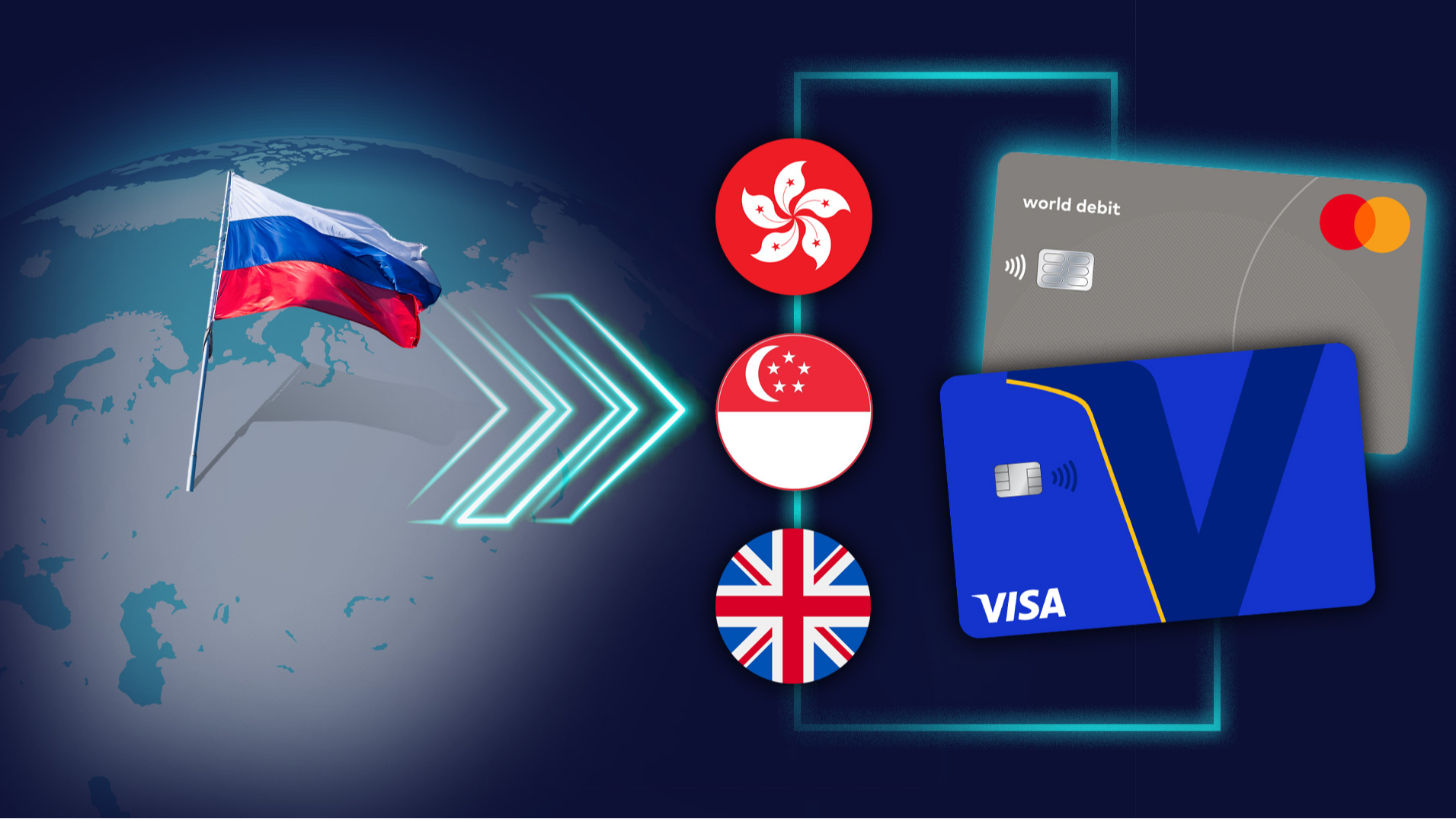
Visa and Mastercard halted operations in Russia in March 2022, leaving Russian-issued cards unusable abroad while still functioning domestically through Russia's own processing system, NSPK. Over time, the security certificates on these old cards have begun expiring, and Russian authorities reportedly plan to phase them out entirely by 2028 by cutting the fees banks earn from them, pushing the country toward the domestic Mir payment system.
A workaround market emerges
Demand for international payment access hasn't disappeared, however. An investigation identified around 50 services — mostly crypto exchanges and little-known platforms — offering virtual cards that let Russians reconnect to global payment networks. Users top up these cards via a website, Telegram bot or app using cryptocurrency (typically stablecoins) or even Russian roubles through the domestic Faster Payments System, receiving a balance in dollars or euros usable for online purchases, subscriptions or travel.
One of the most popular services, CinCin, is heavily promoted by Russian-speaking bloggers and issues cards within minutes for as little as around $55. Verification is often minimal, sometimes requiring nothing more than a disposable email address. CinCin advertises transaction limits as high as $50,000 per payment and $2 million per month with little to no identity checks — a combination that raises serious concerns about potential money laundering and other illicit uses.
Asian intermediaries behind the cards
These platforms don't work with Visa or Mastercard directly. Instead, they rely on "BIN sponsors" — licensed financial institutions authorized to issue cards under the payment networks' brands. The investigation traced cards to Singapore-based fintech firms Sunrate and UQPAY, both recognized as principal members by Mastercard and/or Visa, with additional operations in Hong Kong and the UK. The long chain of intermediaries makes it difficult to track who ultimately holds a card and how it is being used, effectively undermining the payment giants' formal exit from the Russian market.


/nginx/o/2026/09/18/17925296t1h8c99.png)