How Latgalian Fares in the Age of AI: Research, Speech Recognition and Digital Resources
Researchers at the University of Latvia's Institute of Mathematics and Computer Science and Rēzekne Academy of Rīga Technical University are building digital resources and AI tools for Latgalian. They include the LATE-LTG speech recognition tool, a speech corpus and thesaurus updates.
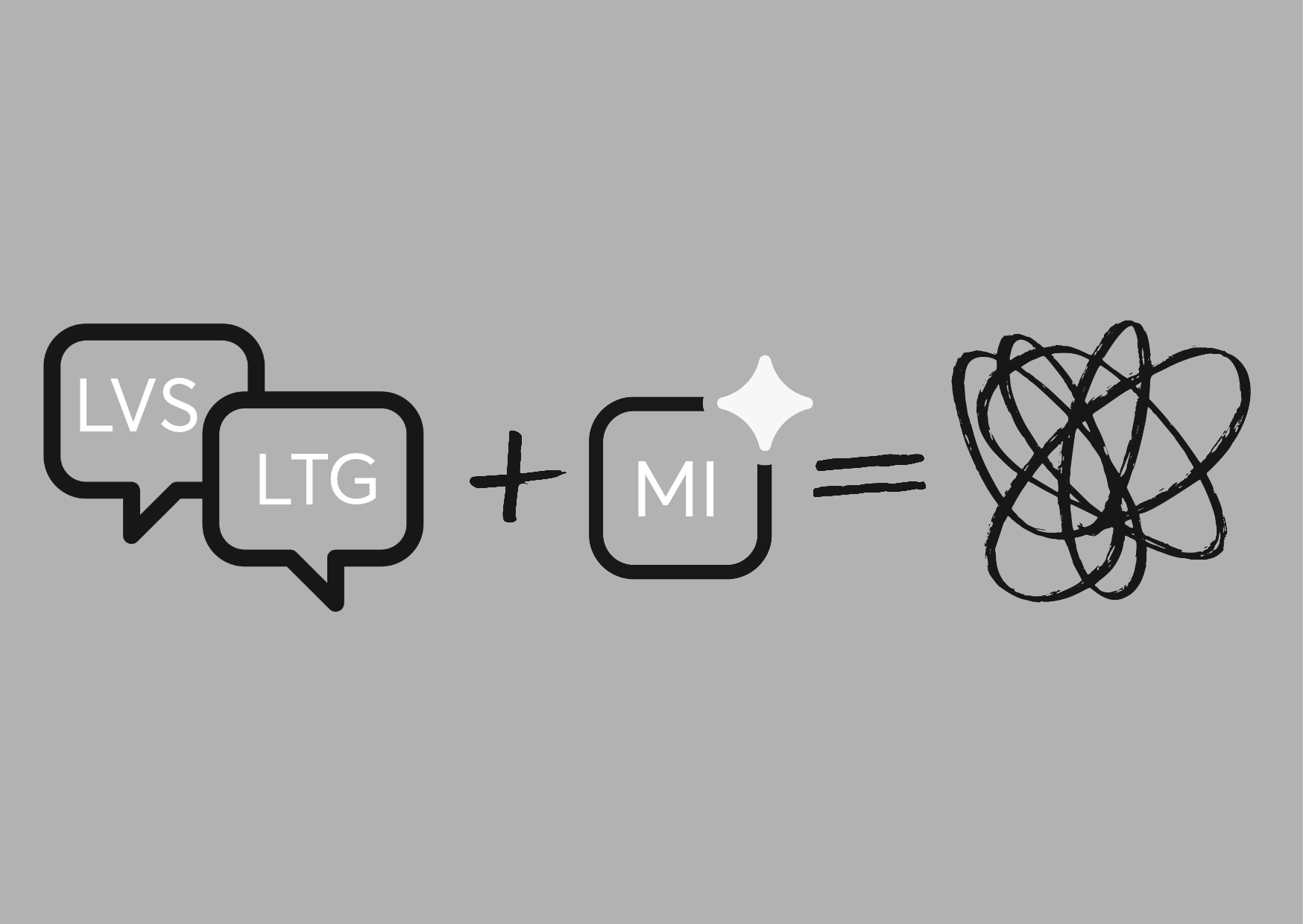
The rise of artificial intelligence (AI) opens new possibilities for small regional languages, but results are limited by how much data is available. The Latvian portal lakuga.lv examined where written Latgalian, a regional variety of Latvian, stands in the AI world, drawing on comments from specialists at the University of Latvia's Institute of Mathematics and Computer Science (LU MII) and the Rēzekne Academy of Rīga Technical University (RTU RA).
Lack of data is the main obstacle
Artūrs Znotiņš, a researcher at LU MII who studies and develops large language models, says the accuracy of AI for Latgalian depends chiefly on how much data is available for training. Latvian is regarded as a relatively low-resource language, and written Latgalian has even fewer resources. The situation is further complicated by the variety of spellings, dialect forms and mixtures of Latvian and Latgalian found in digital texts.
Znotiņš explains that in low-resource languages models can show fairly good knowledge and comprehension, yet make many mistakes when generating text on their own, often showing the influence of larger languages. In his view, significant improvements are possible by working with high-quality data, which is why cooperation among linguists, researchers, educational institutions, media and language users matters.
The DigiLATE project and speech recognition
LU MII, the University of Latvia's Faculty of Humanities and RTU RA continue work on the project "Digital Resources and AI Technologies for the Sustainability of the Latvian Language" (DigiLATE). Ilze Auziņa of LU MII says it has produced LATE-LTG, an automatic speech recognition and transcription tool freely available at ltg.late.ailab.lv. Users can upload an audio or video recording and have spoken Latgalian converted into written text. It can be used for subtitles, transcribing interviews and learning written Latgalian.
The tool was first trained to recognise standard Latvian, where far more data exists, and then adapted to Latgalian.
Speech corpus, thesaurus and "Bolsu tolka"
Researchers at Rēzekne Technology Academy created the Contemporary Latgalian Speech Corpus (MuLaR), which gathers 33 hours of Latgalian recordings: interviews, expedition materials, radio and television programmes, and samples from Latgalians living outside Latvia. Philologist Antra Kļavinska says the next version of the Latgalian thesaurus should be ready at the end of this December. Under the "Bolsu tolka" initiative, any speaker of the language can add to the speech data by recording sentences or checking other participants' recordings, at balsutalka.lv/ltg/.
An example from Varakļāni
The association "Varakļānu attīstībai" is preparing a digital tourism guide in four languages: Latvian, Latgalian, English and German. The Latgalian translation was produced with AI, and the association says it will be refined with the help of local language experts. Kļavinska adds that recommendations and guidelines are being prepared for minority-language media on the responsible use of AI.


