How Turkey's 2016 Coup Attempt Changed the Country Irreversibly
The failed coup on July 15, 2016, triggered sweeping political changes in Turkey, including a state of emergency, massive purges, and a shift to a presidential system that consolidated President Erdogan's power.
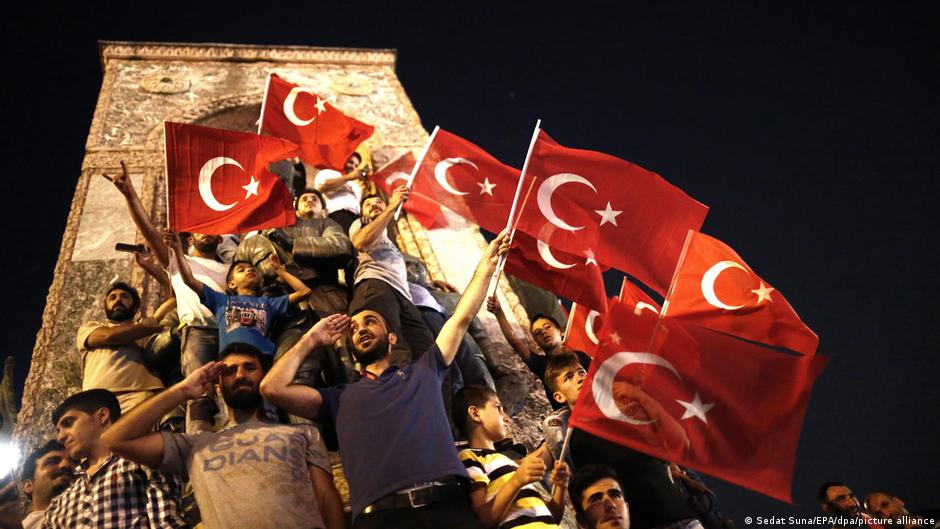
On the evening of July 15, 2016, nothing suggested that Turkey was about to undergo a fundamental transformation. Within hours, tanks rolled through the streets, fighter jets flew over Ankara and Istanbul, and soldiers blocked the Bosphorus Bridge. Parliament came under fire. President Recep Tayyip Erdogan called on the public to take to the streets to stop the coup. The coup attempt failed that night, but its political consequences continue to influence the country to this day.
The government blamed the Gulen movement, led by cleric Fethullah Gulen, who was living in exile in the US and died in 2024. Gulen and his followers denied involvement. Official figures say 253 people died, mostly civilians. July 15 is now a national holiday, and the Bosphorus Bridge was renamed the "Bridge of the Martyrs of July 15."
Six days after the coup, parliament approved a state of emergency. Initially limited to three months, it was extended seven times and lasted until July 19, 2018. During those two years, the president governed largely by emergency decrees, issuing 32 decrees. The consequences were enormous: over 125,000 civil servants and military personnel were dismissed. From 2016 to 2025, approximately 390,000 people were detained or arrested on suspicion of ties to the Gulen movement, with about 113,000 placed in pretrial detention. Additionally, 2,761 institutions—including schools, associations, foundations, and media outlets—were closed, and 4,130 people received life sentences for involvement in the coup.
Political scientist Ersin Kalaycioglu says the state of emergency's practices have become institutionalized, leading to an extremely centralized structure. The bureaucracy has shifted from a professional apparatus to one that primarily implements political directives. Opposition parties accuse the government of expanding purges beyond the Gulen movement to include government critics.
Politically, the coup attempt accelerated the alliance between Erdogan's AKP and the ultranationalist MHP. With their support, a constitutional referendum in 2017 transitioned Turkey from a parliamentary to a presidential system, abolishing the prime minister's office and significantly expanding presidential powers. Critics call it a "one-man system," and Kalaycioglu describes it as a fundamental regime change toward "neopatrimonial sultanism."
The presidential system also transformed the opposition. To win the presidency, opposition parties formed electoral alliances and ran joint candidates. This strategy paid off: in the 2019 and 2024 local elections, the opposition CHP won mayoral races in Istanbul and Ankara. However, many opposition politicians now face investigations or terrorism allegations. A prominent case is Istanbul Mayor Ekrem Imamoglu, Erdogan's main challenger, who faces criminal prosecution after his re-election.