Stuck behind wind turbine blades on the road? Here's what Latvian traffic rules say
Latvia's State Police explain the rules drivers must follow when an oversized load, such as wind turbine blades, slows traffic on the highway. Authorities are not required to publicly announce such transports in advance.
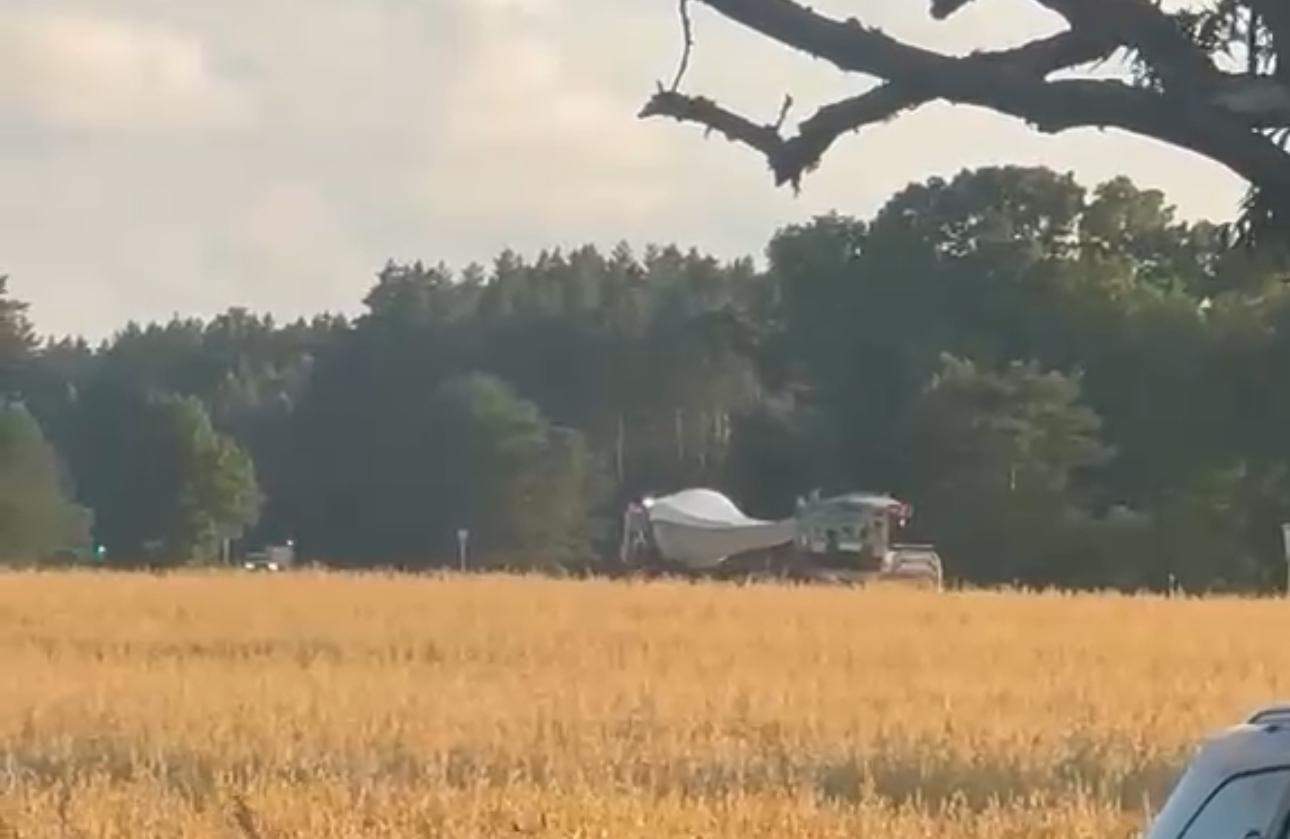
Getting stuck behind an oversized load on the road, such as wind turbine blades being transported by truck, is a situation many drivers have faced. One reader recently told a Latvian newspaper that she ended up arriving at her destination much later than planned after traffic slowed to a crawl behind such a shipment, adding that she wasn't sure what she would have done had she faced an emergency at the time.
To clarify how traffic is managed during oversized-load transports, the outlet asked the State Police for details.
When slow-moving loads must let others pass
According to traffic regulations, vehicles that are prohibited from exceeding, or technically unable to exceed, 40 km/h must travel only in the right-hand lane, entering other lanes only to overtake, pass, or turn. The rules further state that such slow vehicles may briefly use the paved road shoulder to let other traffic pass. If a traffic jam forms behind the load and overtaking isn't possible due to road width or oncoming traffic, the driver of the slow vehicle must stop and let the queued vehicles pass.
When a police escort vehicle accompanies the oversized load, other drivers must follow police signals and instructions, avoid interfering with the escort, and may only overtake if police permit it and it poses no safety risk.
No requirement to notify the public in advance
Permits and procedures for oversized and heavy-load transports are governed by a 2010 Cabinet of Ministers regulation, which covers route and timing approval as well as conditions for police escorts. However, current legislation does not require authorities to publicly announce planned oversized transports in advance, though the road administrator or a responsible institution may choose to do so if the transport significantly affects traffic.
What to do in an emergency
Police noted that even in urgent situations — such as a passenger going into labor or a pet needing emergency veterinary care — dangerous overtaking maneuvers are not permitted. If there is a direct threat to someone's life or health, drivers should immediately call the emergency number 112, after which emergency services will assess the situation and, if necessary, coordinate traffic to resolve it safely.
/nginx/o/2025/11/13/17275350t1h6334.jpg)