On foot only: daily life at one of Lithuania's last crossing points with Russia
At the Panemunė crossing point on the Nemunas river, where the Queen Louise Bridge has stood closed since 2022, around 200 people cross on foot every day, mostly to visit relatives or graves in Russia's Kaliningrad exclave, under strict customs and entry rules.
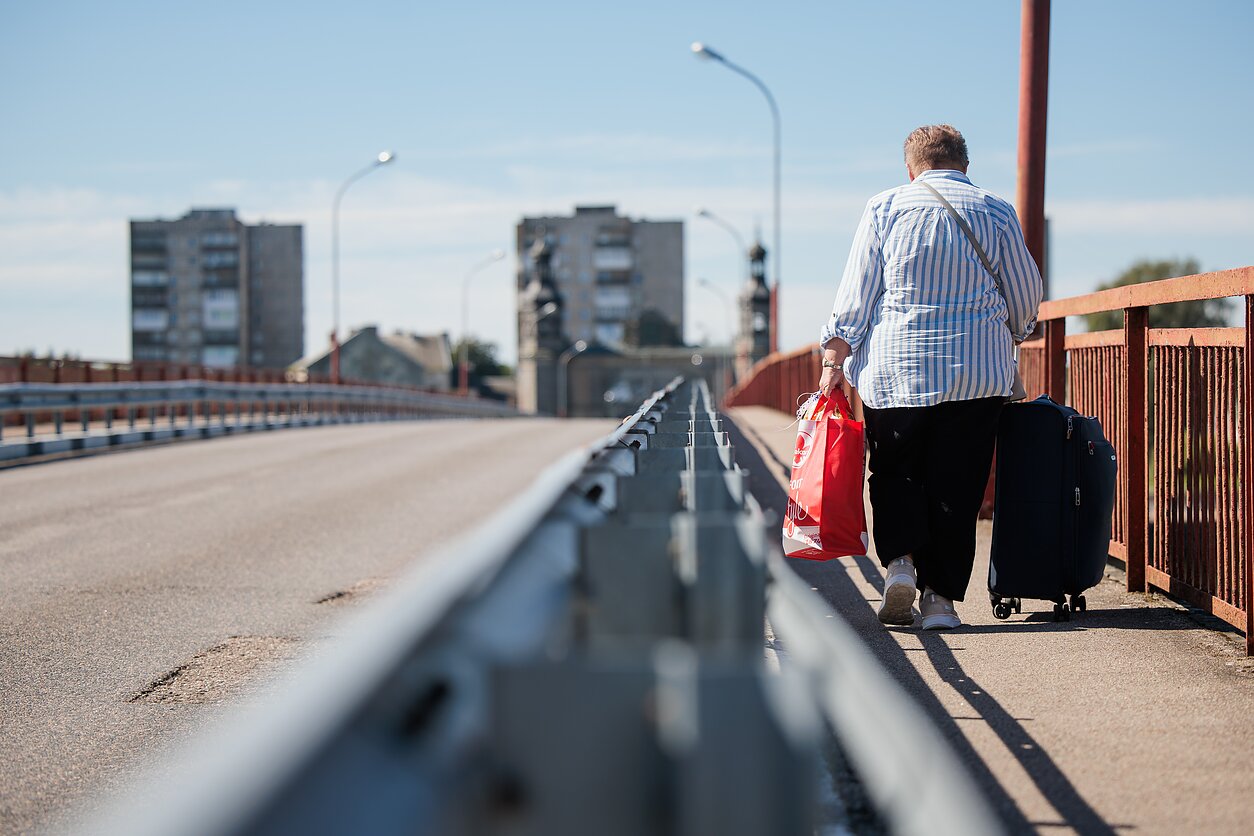
The Queen Louise Bridge over the Nemunas river, linking Lithuania to the Russian town of Sovetsk, has remained closed since April 2022, two months after Russia's invasion of Ukraine began. Russia originally cited repairs, but four years on almost no work has taken place. The site reflects the broader state of relations between the two countries: on the Russian side, a wall bears the letter Z, the symbol associated with Russian forces in Ukraine, while on the Lithuanian side a Ukrainian flag flies beside the national one, and the road is blocked by anti-tank "dragon's teeth" obstacles.
Despite the closure, a narrow pedestrian checkpoint beside the bridge remains open, and about 200 people cross there on foot each day. Panemunė is one of only two active Lithuania-Russia border crossings still functioning; the other, Kybartai, handles vehicle traffic. Three further crossings were shut during the Covid pandemic and never reopened after 2022. Most people and freight instead travel by rail, with three or four transit trains running each way daily, each able to carry up to 300 passengers.
Who crosses, and why
Colonel Rimantas Petrauskas, commander of the Pagėgiai border unit, says most pedestrians heading into Russia's Kaliningrad exclave are Lithuanian and Latvian citizens visiting relatives or tending graves. Others are Russian citizens holding Lithuanian or Latvian residence permits, or dual nationals with German, French or Israeli citizenship, some using the crossing to reach Lithuanian airports. Only EU citizens may cross without a visa. Crossing numbers rise in January, around Russian Christmas, and by 30-40% in summer.
Tight entry and customs rules
Since September 2022, Russian citizens have been barred from entering Lithuania except in limited cases such as diplomats, dissidents, haulage workers, family members of EU citizens, or humanitarian grounds like funerals. Twenty-four categories of goods, including most foodstuffs, alcohol and tobacco, cannot be brought in from Russia. Exports to Russia are not fully banned but fall under extensive EU sanctions and export controls. Undeclared cash remains a recurring issue at the crossing.
Petrauskas says requiring pedestrians to cross on foot has largely eliminated traditional smuggling, with cash now the main concern, while illegal migration in the area is almost nonexistent.


