California's billionaire tax proposal heads to voters in November
California voters will decide on a one-time 5% tax on residents worth over $1 billion. The measure, backed by a major union, faces fierce opposition from Governor Newsom and Silicon Valley billionaires.
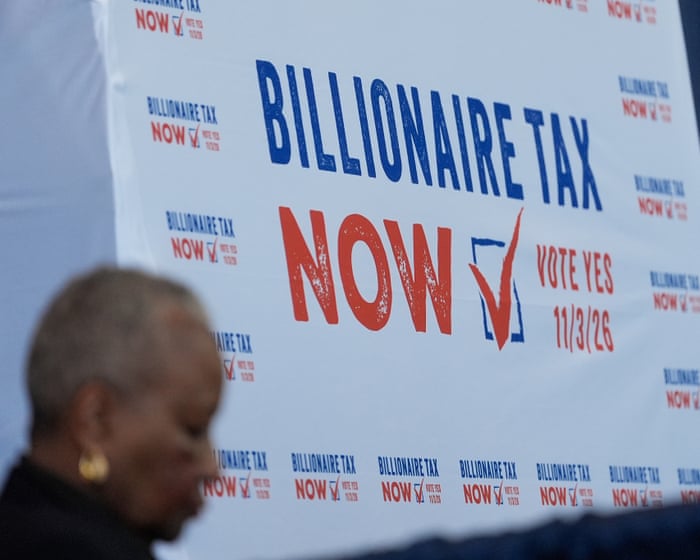
California's secretary of state certified a ballot measure on Thursday that would impose a one-time 5% tax on billionaires living in the state. The initiative qualified after supporters collected more than double the required number of signatures.
The California Billionaire Tax Act applies to any California resident with a net worth exceeding $1 billion, retroactive to January 1, 2026. The state is home to roughly 200 billionaires, many of whom have seen their fortunes grow during the AI boom.
The proposal is backed by the Service Employees International Union-United Healthcare Workers West (SEIU-UHW). The union says the revenue would fund food assistance, education, and healthcare programs, particularly to prevent hospital closures. Suzanne Jimenez, chief of staff for SEIU-UHW, called the tax "a reasonable step" in response to federal healthcare cuts under Donald Trump's One Big Beautiful Bill Act.
However, powerful opponents have lined up against the measure. Governor Gavin Newsom has vowed to block it, arguing that such a tax would drive billionaires out of the state and erode tax revenue. Last week, Newsom attempted to negotiate a deal with the union, but rejected a compromise that would have lowered the tax from 5% to 2%.
Silicon Valley billionaires have mounted an even more aggressive campaign. Google co-founder Sergey Brin, worth about $260 billion, has spent at least $82 million to oppose the tax. Crypto billionaire Chris Larsen, worth over $11 billion, has contributed at least $13.2 million. Other donors include Peter Thiel, Eric Schmidt, Tony Xu, and Patrick Collison.
Their spending has paid off: two competing initiatives have also made the November ballot. One would ban new taxes on individual assets and savings, while the other would require audits of programs funded by voter initiatives. As a result, California voters will face three tax-related measures, which election watchers say could cause confusion.